
Coal
Mobile bulk handling for thermal and metallurgical coal across mines, washplants, terminals and power stations.
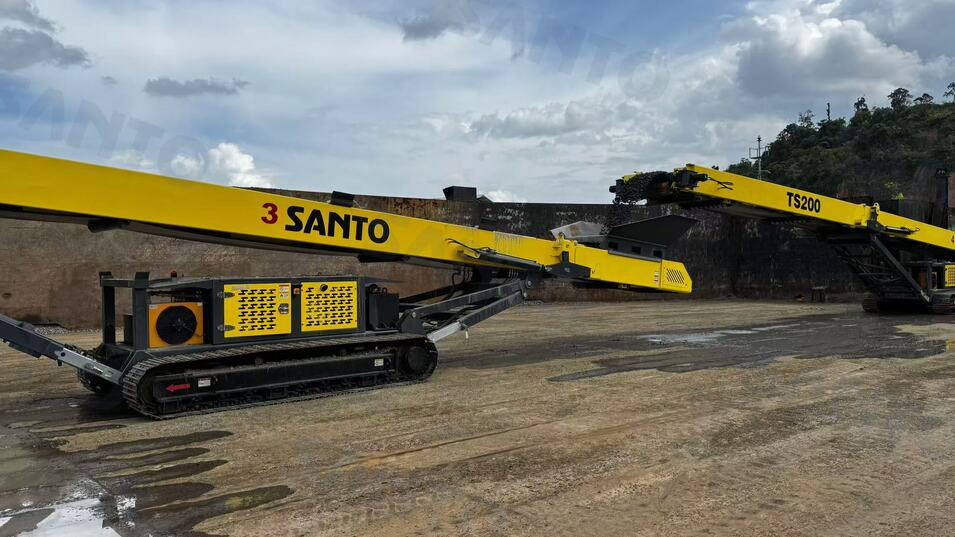
SANTO supplies mobile conveying, stacking and loading equipment engineered for coal — from receiving and stockpiling to reclaim and load-out. The notes below cover the properties that matter, the problems that typically appear on site and the machines we recommend.
Why Mobile Conveying Suits Coal
Coal is a dense, friable carbonaceous solid with bulk density around 0.8–1.0 t/m³ and strong dust and spontaneous-heating tendencies. The mobile ship loader trims hatches with enclosed chutes that cut dust and degradation during export loading.
- Enclosed, telescopic loading minimizes dust and cargo degradation
- Continuous conveying replaces loader haulage and cuts emissions
- Radial stacking builds dense, ventilated stockpiles
- Mobile units serve mine, washery, terminal and plant alike
- Belt scrapers and sealed transfer contain fine coal dust
Physical Properties and Handling Behaviour
The table below summarises the properties that decide belt specification, chute geometry and stacking method for this material. Values are typical ranges — actual figures vary with source and moisture content, so we test your sample before finalising a design.
| Property | Typical Value / Handling Impact |
|---|---|
| Bulk density | 0.8–1.0 t/m³ (loose, rank-dependent) |
| Moisture | Up to 10–15% surface moisture when washed |
| Abrasiveness | Moderate to high; fine fraction is very abrasive |
| Angle of repose | 30–40° depending on size and moisture |
| Handling note | Control dust and avoid fine degradation; watch heat |
Handling Challenges with Coal — and How SANTO Solves Them
Coal fines generate heavy dust that breaches permits and, combined with moisture, can bridge or heat in pile. Double-handling breaks lumps into worthless fines and raises fire risk.
SANTO mobile loaders and stackers use low-drop, enclosed transfer and telescopic trimming to keep dust down and lumps intact. Sealed bearings, belt scrapers and proper pile ventilation manage the fine, heat-prone fraction safely.
- Minimize drop height and enclose transfer to control dust
- Use belt scrapers and sealed bearings against fine abrasion
- Build ventilated stockpiles to limit spontaneous heating
Recommended SANTO Equipment
For coal we most often supply the machines listed below. Each can be configured with the belt width, boom length and drive power your tonnage requires, and each is available on wheeled, tracked or crawler chassis.
- Mobile Ship Loader — configured for coal duty
- Tracked Radial Stacker — configured for coal duty
- Radial Truck Unloader — configured for coal duty
- Feeder Track Stacker — configured for coal duty
Typical Stockpiling and Loading Setups
A well-planned coal yard keeps receiving, stacking and reclaiming on separate paths so trucks never queue behind a loader. In the most common layout, a mobile conveyor receives from the tipper or hopper and feeds a radial telescopic stacker that builds a layered stockpile, while a second conveyor reclaims to the loading point.
- Receiving: hopper or direct truck discharge into a mobile conveyor
- Stacking: radial or telescopic stacking to build layered, drainable stockpiles
- Reclaim: front-end loader feeding a mobile conveyor, or direct reclaim conveyor
- Load-out: conveyor to truck, wagon, barge or vessel hold
Frequently Asked Questions
How is coal dust controlled during handling?
Enclosed chutes, telescopic trimming that lowers drop height, and belt scrapers keep fine coal contained at loader and stacker.
Why avoid double-handling coal?
Repeated drops break lumps into low-value fines and raise dust and fire risk; continuous conveying preserves cargo quality.
What rate can mobile coal equipment achieve?
Configurations from roughly 200 to 1500 t/h cover mine, terminal and power-station duties.
Need the right machine for your site?
Send us your material, required capacity and site layout. SANTO engineers will size the equipment and return a configuration proposal within 12 hours — no obligation.