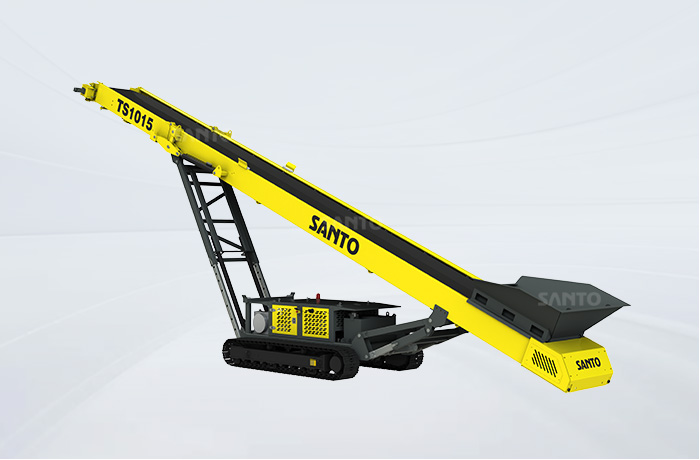
Tracked Stockpiler
Tracked stockpiler with 15-30 m belt and up to 1000 t/h for crushers and screeners. Heavy…
Learn more
Mobile conveying, feeding and stockpiling equipment engineered for the abrasive, high-tonnage duty cycles of quarries, pits and open-cut mines.
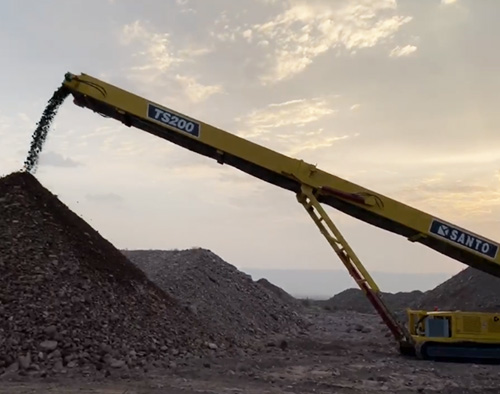
In quarrying and mining, material moves continuously from face to crusher to stockpile. SANTO mobile conveyors and stackers replace costly loader haulage with continuous, low-cost belt transport that follows the operation as it advances.
Mines and quarries run abrasive, variable-size rock around the clock, often across shifting faces and temporary haul roads. Fixed conveyors cannot keep pace with a moving pit, while haul trucks and loaders burn fuel and labor for every tonne moved.
Downtime at the crusher is the most expensive event on site: if the screen or crusher starves, the whole plant loses output. Conveying must therefore be both mobile and reliably fed at a controlled rate.
A tracked stockpiler positioned beneath or beside the crusher keeps the plant at full capacity, while grasshopper conveyors carry product away from the processing train without extra drives. Feeder stackers accept excavator or loader feed directly and meter it onto the belt.
For primary feed, a feeder track stacker buffers blasted material and delivers a steady stream to the crusher, smoothing surges that would otherwise stall it. The whole train relocates as the working face advances, so haul distances stay short.
Choose belt specification for the material: 15–25 mm rock needs impact beds and abrasion-resistant covers, while fines require skirt seals to limit spillage. Belt widths of 800–1400 mm and lengths to 41 m suit most quarry trains at 200–1200 t/h.
Tracked mobility pays off where the floor is uneven or soft; wheeled units are faster on prepared pads. Specify heavy-duty idlers, sealed bearings and a robust impact bed at the load zone to control wear.
Replacing loader haulage with continuous conveying typically removes a large share of fuel, tire and operator costs, lowering cost per tonne sharply. Fewer truck-loader interactions also reduce site traffic incidents.
Higher crusher utilization is the decisive gain: keeping the plant fed means more saleable product per shift, and the mobile train scales output simply by extending the grasshopper run or adding a second stacker.
By replacing repeated loader and truck haulage with continuous belt transport, cutting fuel, tire, maintenance and operator hours while raising crusher utilization.
Yes. Tracked and wheeled units relocate with the face, and grasshopper conveyors extend reach without added drives, keeping haul distances short.
Abrasion-resistant belt covers, impact beds at the load zone, sealed rollers and properly specified idlers handle the high-density, sharp material typical of quarries and mines.
They buffer blasted surge and meter a steady feed, preventing the stall-and-starve cycling that costs plants lost tonnage.
Tracked stockpiler with 15-30 m belt and up to 1000 t/h for crushers and screeners. Heavy…
Learn more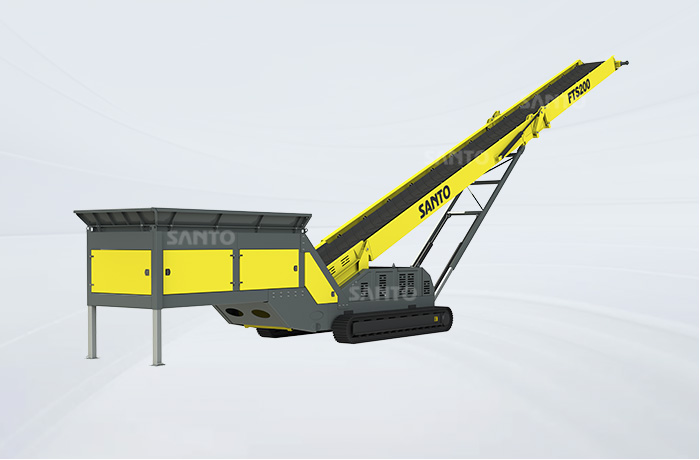
Feeder track stacker with integrated hopper and belt feeder, 15-20 m belt and 100-1000 t/h.…
Learn more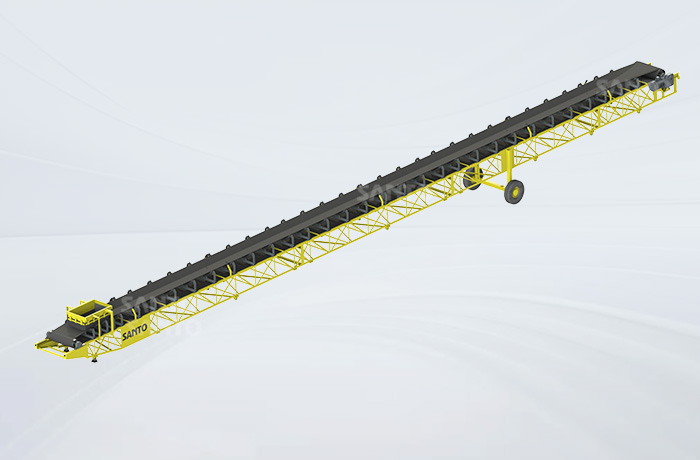
Grasshopper transfer conveyor, 20-45 m and 300-700 t/h, wheel-mounted to move bulk long…
Learn moreSANTO mobile conveyors and stackers handle hard rock and overburden. Abrasion-resistant,…
Learn moreSANTO tracked stackers and feeders handle iron ore and fines. Extreme-duty, high-tonnage…
Learn more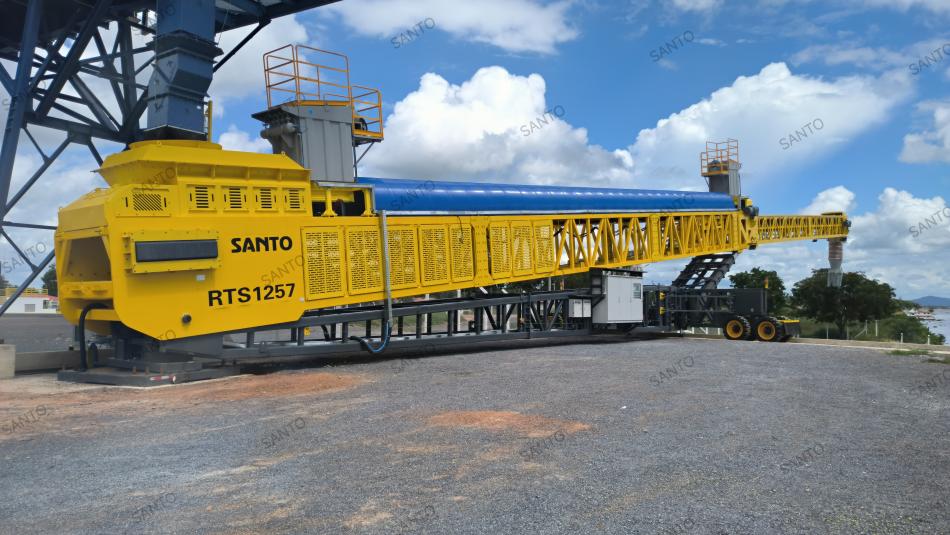
SANTO mobile stackers and conveyors stockpile and transfer aggregate — crushed stone, gravel…
Learn moreSend us your material, required capacity and site layout. SANTO engineers will size the equipment and return a configuration proposal within 12 hours — no obligation.