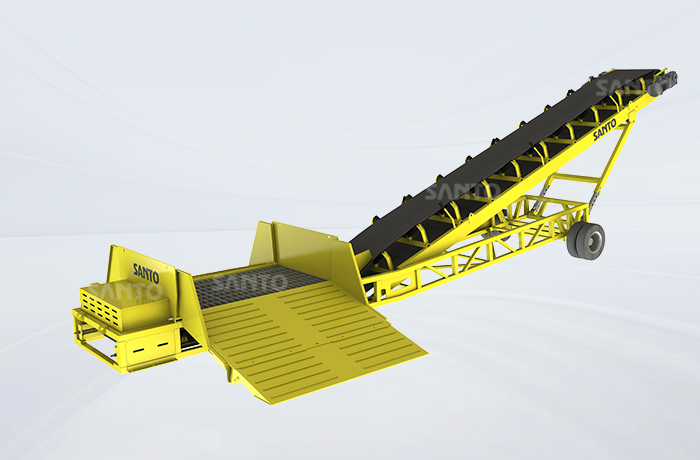
Mobile Truck Unloader
Mobile truck unloader for bulk solids, 15-18 m belt, 700 t/h, VFD and adjustable platform.…
Learn more
Trackside mobile conveying for fast, clean transfer of bulk solids between railcars, stockpiles and road transport without fixed infrastructure.
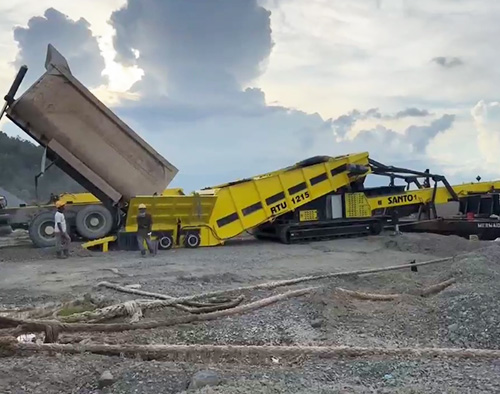
Rail is the backbone of long-haul bulk movement, but loading and unloading cars is where demurrage and double-handling costs accumulate. SANTO mobile conveyors, unloaders and stackers let operators serve a siding with flexible, high-rate equipment.
Rail sidings are often temporary, shared between commodities, or located far from fixed plant. Traditional pits and fixed loadouts tie capital to one track and one product, and manual digging of cars is slow and labor-intensive.
The commercial pressure is clear: every hour a wagon sits idle is demurrage, while spillage and contamination between cargoes erode grade value. Equipment must therefore load and clear cars quickly and switch products cleanly.
For unloading, a mobile truck unloader or radial truck unloader draws material from a hopper fed by rail discharge, then conveys it to stockpile or road truck. For loading, a tracked radial stacker or feeder stacker fills cars from a live pile or direct conveyor feed.
Grasshopper conveyors let a single feed point serve a long rake of wagons, while radial slew positions the belt exactly over each car. The system packs up and moves to another siding when the train leaves.
Rate is governed by car size and train length: a 100–1500 t/h conveyor with 800–1600 mm belt clears most rakes within the allowed window. Telescopic and radial features reduce repositioning and keep the belt centered over the wagon.
For sticky or wet cargo, specify a low feeder with aggressive belt scrapers and a vibratory or chain feeder to keep flow steady. Dust enclosures protect both product and the surrounding environment.
Faster loading and unloading directly cuts demurrage and frees rolling stock for more cycles. Continuous conveying also removes the loader traffic and manual handling that drive trackside incidents.
Because the same mobile asset serves multiple sidings and commodities, capital is spread across far more tonnage than a fixed loadout, typically paying back within a few seasons of improved wagon turnaround.
Yes. At 100–1500 t/h with radial slew and telescopic reach, a single feed point can serve a long rake of wagons and clear it within the allowed demurrage window.
Clean, enclosed transfer points and quick belt changeover let one mobile system handle successive commodities without mixing grades.
No. Mobile unloaders, stackers and grasshopper conveyors serve a siding directly and relocate to another track when the train leaves.
Low feeders with belt scrapers, vibratory or chain infeed keep difficult material flowing and prevent bridging at the rail transfer point.
Mobile truck unloader for bulk solids, 15-18 m belt, 700 t/h, VFD and adjustable platform.…
Learn more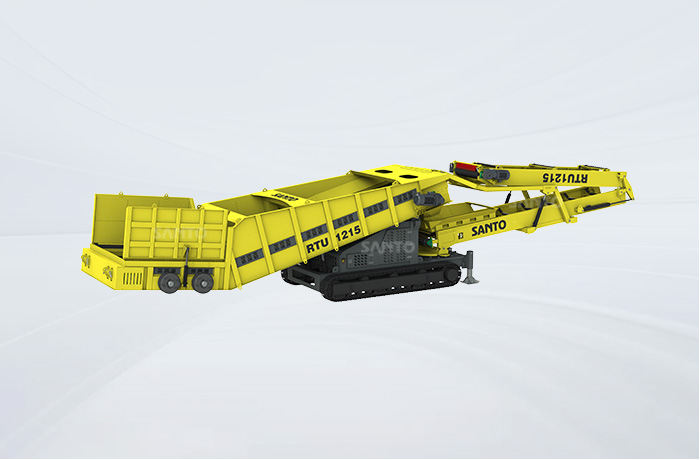
Radial truck unloader with 120° slew and 15 m belt at 700 t/h. Unloads tipping trucks directly…
Learn more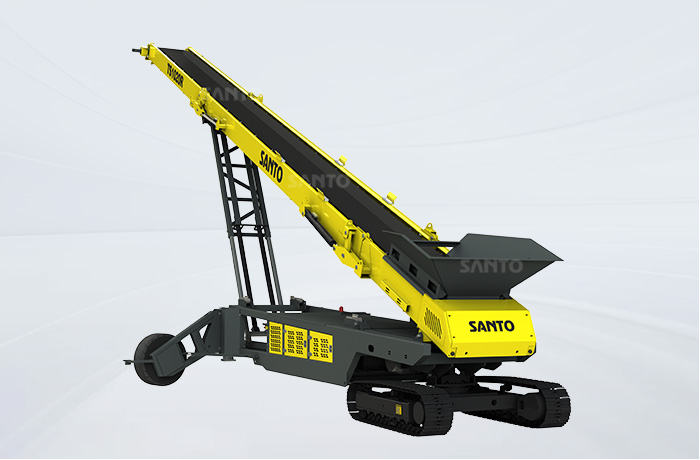
Tracked radial stacker with full 360° slew, 20-30 m belt and up to 1000 t/h. Builds large…
Learn more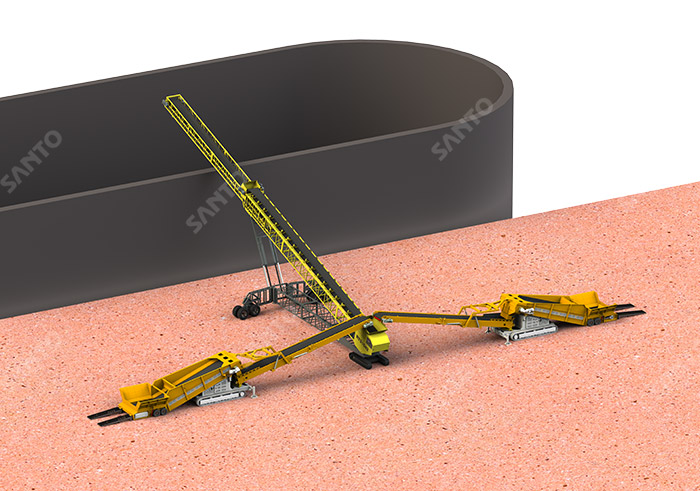
SANTO mobile conveyors and stackers handle dry bulk commodities — grains, ores, fertilizers —…
Learn more
SANTO mobile conveyors and stackers handle thermal and coking coal — dust-controlled,…
Learn moreSANTO mobile conveyors and unloaders handle grain gently. Low breakage, dust-safe transfer for…
Learn moreSend us your material, required capacity and site layout. SANTO engineers will size the equipment and return a configuration proposal within 12 hours — no obligation.