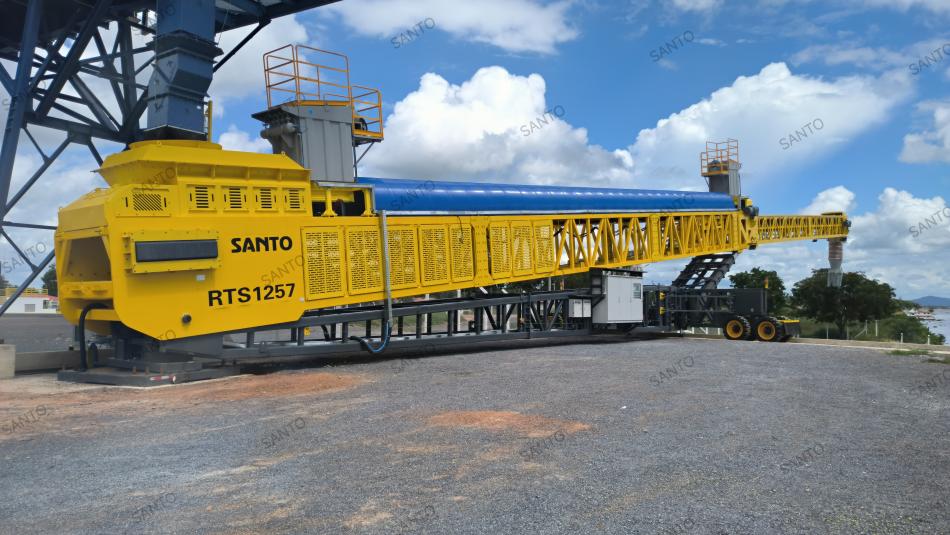
Application of Telescopic Stackers in Ports and Terminals
How telescopic stackers boost port and terminal ship loading with adjustable reach, dust…
Learn more
How the combine of radial slew and telescopic boom speeds and simplifies bulk ship loading.
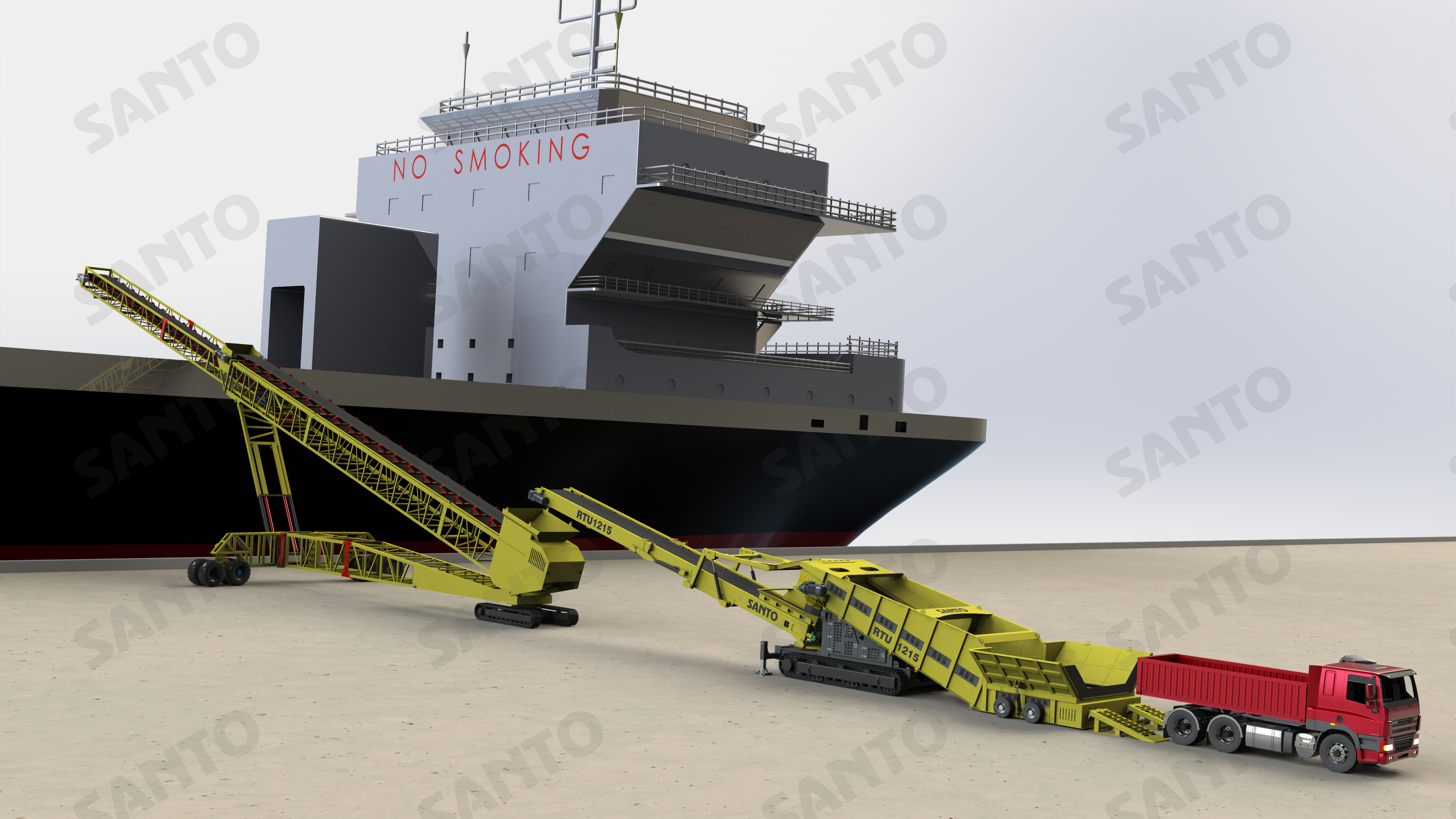
A radial telescopic conveyor pairs rotation around a fixed base with a boom that extends and retracts, covering a wide hatch area from one position. In ship loading this means fewer stops, less repositioning, and precise placement into the hold. The telescopic stackers in ports use the same boom idea at the berth with a rail-mounted base.
Hatch positions and ship sizes vary, and cargo must spread across the hold. The radial function slews the conveyor, often up to 180 or 360 degrees, while the boom telescopes to reach farther into the vessel without moving the base.
Together they cover a large operating radius without moving the whole machine between load points, cutting downtime and labor at the quay during a tight loading window for the ship and its next commitment at the port.
A fixed conveyor must stop and shift when the load point changes. The radial telescopic unit changes angle and length on the fly, which suits the continuous loading of large ships with multiple holds to fill before departure.
Higher conveying speed and no repositioning shorten total loading time, which is the main lever on berth turnaround and demurrage cost for the terminal and the ship owner alike during the peak export season at the port.
Remote or automatic control sets angle and length so cargo lands where intended, reducing manual positioning and the risk of spillage or collision from operator error during a long shift at the hatch of the vessel.
The same machine serves bulk, bagged, or small packaged cargo by swapping belt type or adding chutes, so one unit covers several cargo classes without a second specialized loader stood at the berth during the day.
| Cargo | Adaptation |
|---|---|
| Bulk | Wear or slip-resistant belt |
| Bagged | Gentle discharge chute |
| Packaged | Controlled speed and guides |
One integrated radial telescopic conveyor replaces several fixed conveyors, freeing limited quay space and easing coordination with cranes and trucks that also need the frontage during loading operations at the terminal.
For space-tight terminals this is decisive: more loading capacity from less fixed infrastructure, and quicker redeployment between berths when the next ship arrives ahead of schedule at the port with a different hatch plan.
Match slew angle, boom length, and capacity to the largest ship you expect and the smallest hatch you must fill. Oversizing the boom slightly is cheaper than missing a hold and hand-loading the last corner of the vessel by other means.
The mobile ship loading conveyor advantages are clearest when the unit is specified to the berth. SANTO sizes slew, reach, and belt so the loader fits the vessel mix rather than the other way round, and the ship loader advantages and suppliers comparison confirms the value of this fit.
Commonly up to 180 degrees, with some designs reaching 360 degrees of rotation.
No, it changes angle and length live, keeping the belt running.
Bulk, bagged, and packaged goods with the right belt or chute.
One unit frees quay space and coordinates better with cranes and trucks.
How telescopic stackers boost port and terminal ship loading with adjustable reach, dust…
Learn more
Why mobile ship loading conveyors beat fixed loaders: flexible positioning, continuous…
Learn more
Explore radial mobile telescopic conveyors: how they work, where they are used in ports,…
Learn more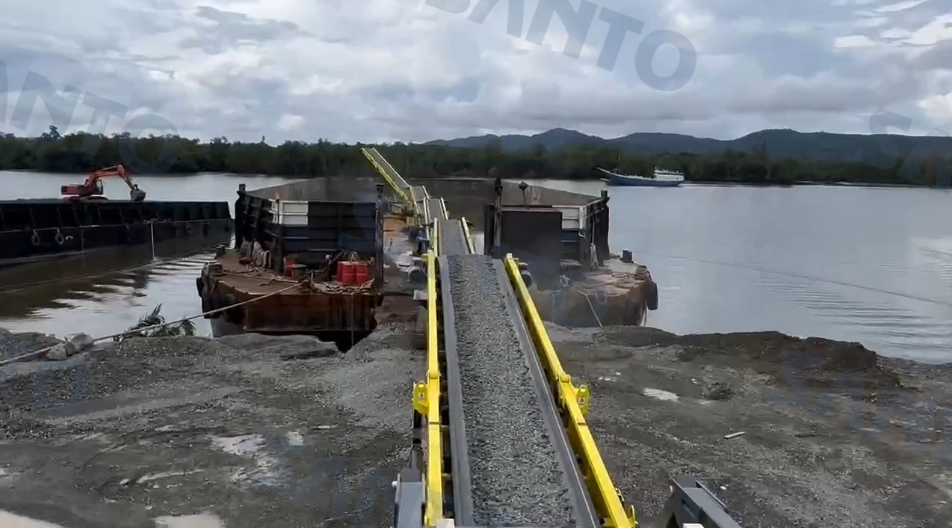
Mobile ship loader on wheels or tracks for coal, ore, grain and cement at ports. High…
Learn moreSend us your material, required capacity and site layout. SANTO engineers will size the equipment and return a configuration proposal within 12 hours — no obligation.