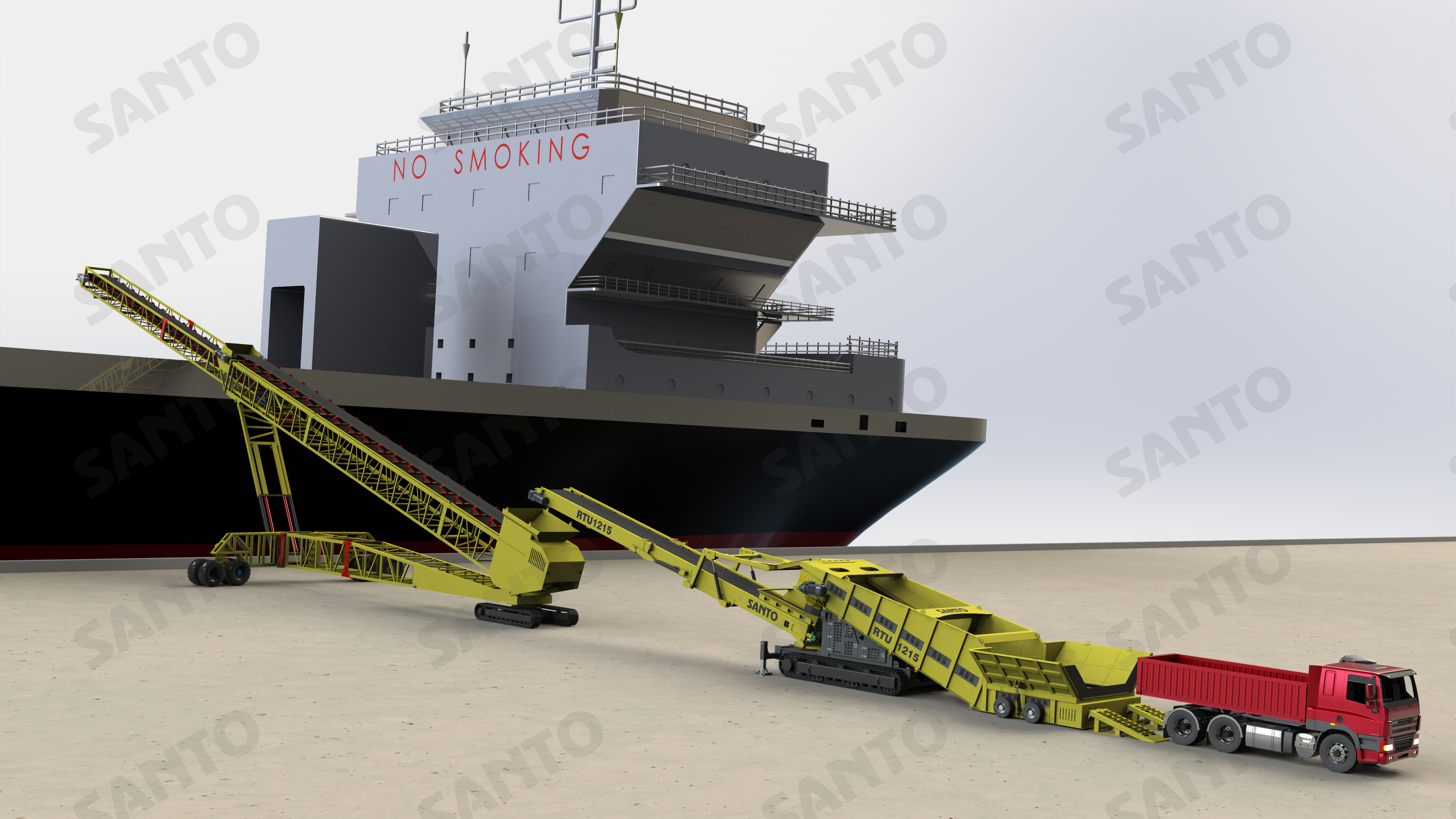
Radial Telescopic Conveyors for Ship Loading Operations
Why radial telescopic conveyors suit ship loading: wide coverage from one base, no-stop point…
Learn more
What a radial telescopic mobile conveyor is, where it earns its keep, and why it beats fixed conveying.
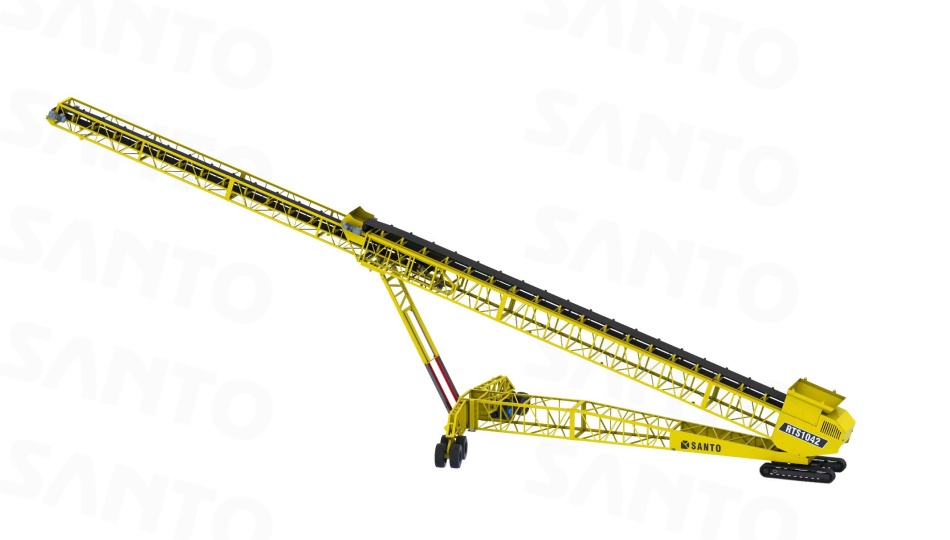
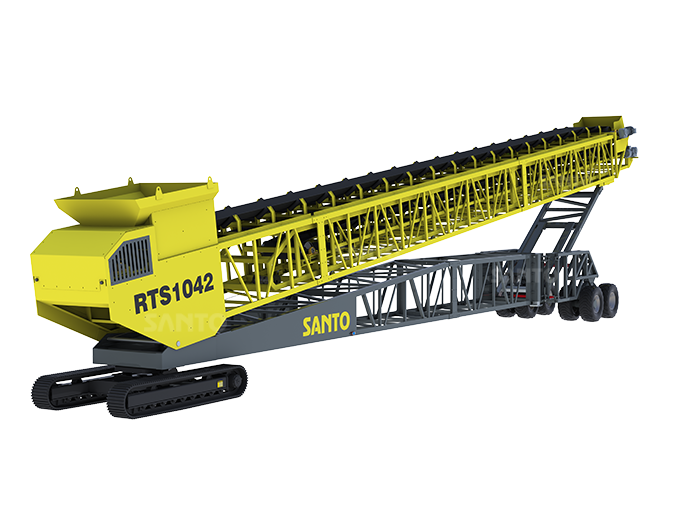
A radial mobile telescopic conveyor is a self-propelled belt unit whose boom both slews around a base and extends or retracts to change reach. It breaks the fixed-conveyor limits of flexibility and layout, serving ports, mines, and warehouses from one relocatable machine. The radial telescopic conveyors for ship loading apply the same idea at the berth.
The conveyor pairs a drive system, a telescopic mechanism, a belt, a travel device, and a control system. The telescopic part is modular, driven by an electric push rod or hydraulic cylinder to extend or contract in the radial direction as the duty changes.
Material enters at the feed end and the belt carries it to a discharge point whose distance is set by the boom. At a dock the boom can reach from quay to hold to complete transfer quickly, removing the need to relocate the whole machine for each load.
Flexible and efficient: the length adjusts in minutes to match the duty, so in mining the boom tracks the growing pile instead of the whole machine moving. In warehousing it docks with different vehicles for seamless transfer without re-layout.
Space-saving: retracted, the footprint shrinks, which helps narrow workshops and multi-machine layouts where floor space is scarce. Automated control adds remote operation, auto start-stop, and fault warning, cutting labor and error risk on the shift at the site.
Ports and docks: the boom reaches the hold and works with lifting gear for continuous loading, shortening berth time. Mines and quarries: it stacks, reclaims, and transfers ore or stone as the pile changes shape through the day.
Warehousing and logistics: it sorts and loads by adjusting angle and length to dock with vehicles and sort systems. The same unit thus spans bulk, piece, and parcel flows from a single chassis on the floor of the building.
| Sector | Typical use |
|---|---|
| Ports | Hold loading, continuous transfer |
| Mines and quarries | Stack, reclaim, transfer |
| Warehousing | Sort, load, dock vehicles |
Fixed conveyors lock the path and the layout, so any change in the pile or the vehicle means a new civil line. The radial telescopic unit adapts reach and layout on the fly and frees space when retracted, which a fixed belt cannot do.
For sites that change season to season, this adaptability is the whole saving. The types of mobile conveyors comparison shows why a radial telescopic unit is the flexible choice when the plan is not yet fixed in concrete at the plant.
Size the boom length and slew to the largest pile or hold you must serve, then pick the belt and drive for the material and the power on site. Over-specifying slightly is cheaper than missing a corner and hand-finishing the load.
The application of telescopic stackers in ports gives a berth-focused example of the same selection, and SANTO engineers tune the boom, slew, and power so the unit fits the duty rather than a catalog line off the shelf.
The boom slews around a base and extends or retracts to change reach without moving the machine.
Ports for hold loading, mines for stacking and transfer, and warehouses for sort and load.
With automated control, remote operation and fault warning reduce on-site labor.
It adapts reach and layout on the fly and frees space when retracted.
Why radial telescopic conveyors suit ship loading: wide coverage from one base, no-stop point…
Learn moreThe main types of mobile conveyors: wheeled, tracked, telescopic, radial, stacker, swivel, and…
Learn more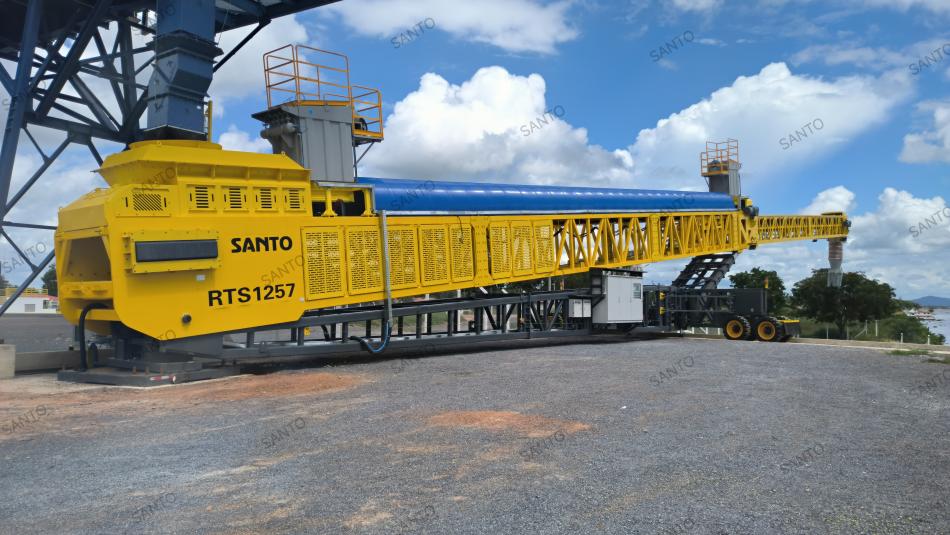
How telescopic stackers boost port and terminal ship loading with adjustable reach, dust…
Learn more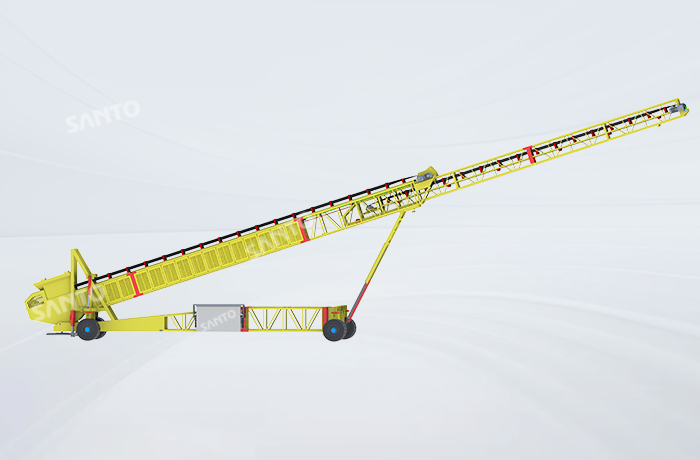
Wheeled radial telescopic stacker with 36-42 m boom, 17.6 m height and 700 t/h. Doubles as a…
Learn moreSend us your material, required capacity and site layout. SANTO engineers will size the equipment and return a configuration proposal within 12 hours — no obligation.