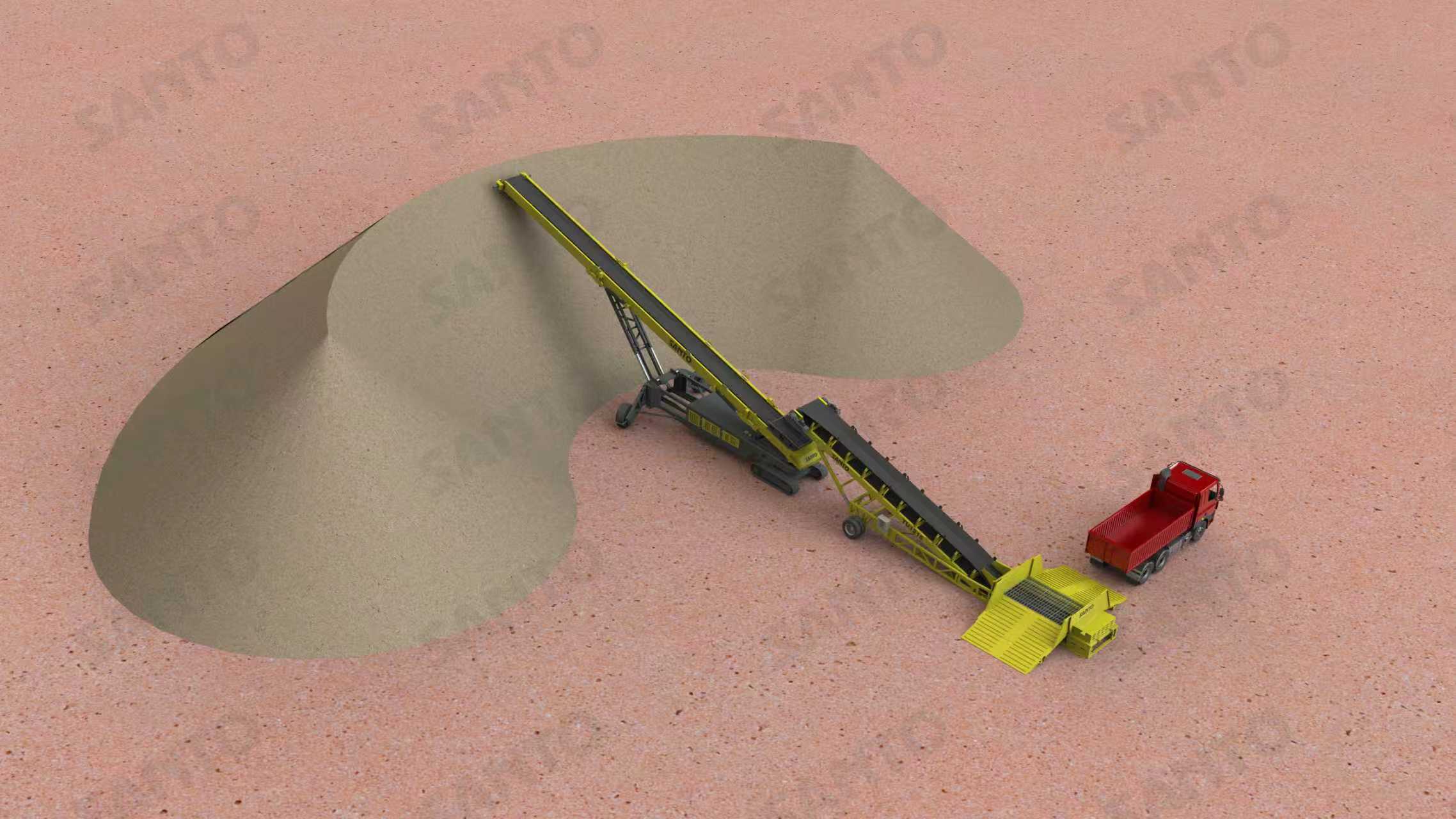
Advantages of Mobile Conveyors for Stockpiling
Why mobile conveyors win at stockpiling: taller neater piles, no transfer breakpoints, lower…
Learn more
Where and how mobile conveyors build better stockpiles across mining, power, port, and building-material sites.
A mobile conveyor is a belt unit on a traveling, lifting chassis that moves material straight from process to pile without civil foundations. In stockpiling it is replacing fixed conveyors because it reaches the pile, adjusts height, and relocates as the yard changes. The types of mobile conveyors explain which chassis fits each yard and duty.
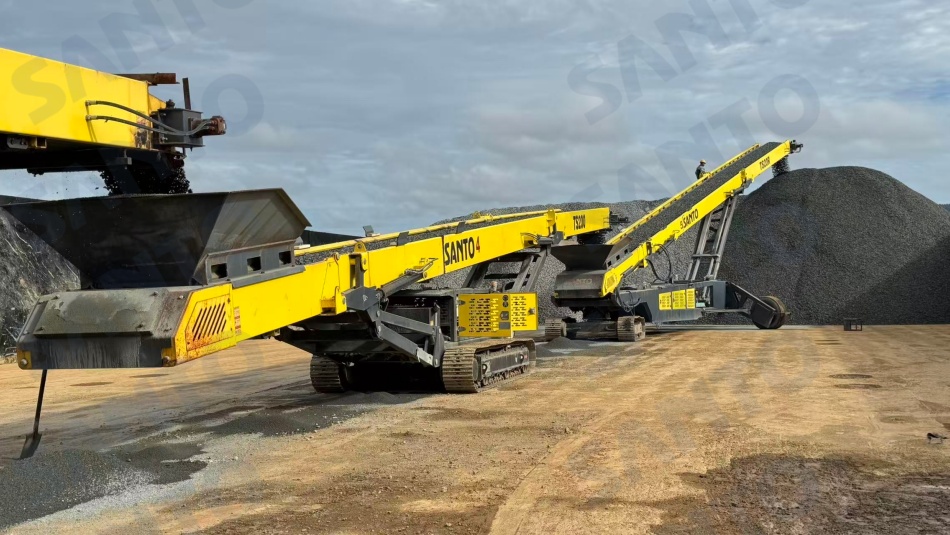
The machine combines a belt conveyor, drive unit, traveling mechanism, lifting system, and electrical control. It can be wheel-mounted, tracked, telescopic, or foldable to suit the duty and the ground it runs on at the site.
Against a fixed conveyor it wins on mobility: no foundations, free movement between stockpile points, and adjustable stacking height through hydraulic or electric lift that suits the material and the pile shape you need to build.
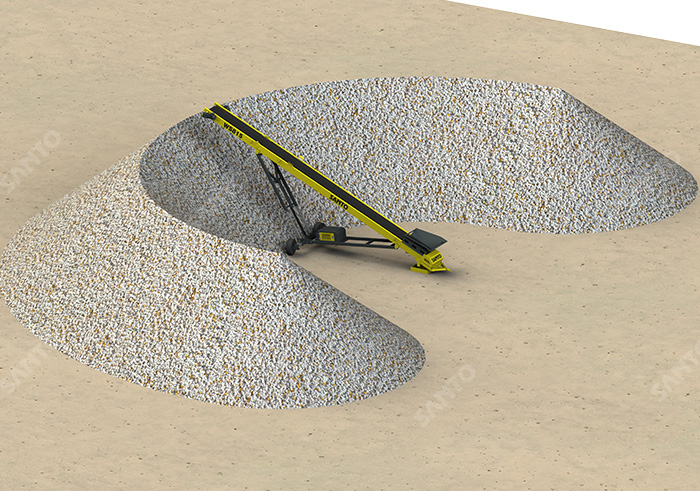
Ore and coal yards use continuous stacking into conical piles for later reclaim. Cement and aggregate lines use temporary piles to lift space use between process stages without building permanent bins that lock the layout.
Ports pair conveyors with grabs or reclaimers for loading and transfer. Grain and chemical sites use enclosed or separated handling to avoid cross-contamination of batches that would spoil or dilute the product during a long storage period.
Adjusting the angle gives continuous, even stacking; maximum stacking height can exceed 10 m, raising yard density. Direct feed from the line lifts overall efficiency by more than 30 percent versus intermittent handling with loaders on the pile.
Enclosed or semi-enclosed conveying cuts dust and fuel next to loader work. Telescopic, slewing, or auto-travel options tailor the unit to yard size and material so the pile stays neat and the ground stays clear for the next move.
SANTO has built mobile conveyor systems for over twenty years and shipped to more than 60 countries across mining, ports, logistics, construction, and agriculture, with references in each of those stockpiling sectors worldwide.
For a stockpile, the right mobile conveyor turns a fixed bottleneck into a flexible, relocatable buffer that grows or shrinks with the operation. The same boom and chassis logic is reused from site to site with only the sizing changed to the material.
Paired with a crusher, the conveyor becomes the backbone of a mobile crushing and conveying plant that follows the face instead of waiting for a fixed line to be built and then abandoned.
Start with pile volume, reclaim method, and ground. A radial stacker builds circular piles that reclaim well; a telescopic unit reaches long, narrow piles; a tracked unit serves rough, reclaimed ground without a prepared pad or concrete base.
Match the conveyor to the loader or reclaimer beyond it so the whole loop runs at one speed. A balanced layout avoids a fast conveyor feeding a slow pile, which is where efficiency and cost gains are lost in practice at the working yard.
More than 10 m is typical for standard units, with heavy radial models reaching higher.
In many yards yes, where flexibility and no foundations outweigh a permanent line.
Mining, power, ports, cement, aggregate, grain, and chemicals.
Direct feed can lift overall handling efficiency by over 30 percent versus loader transfer.
Why mobile conveyors win at stockpiling: taller neater piles, no transfer breakpoints, lower…
Learn more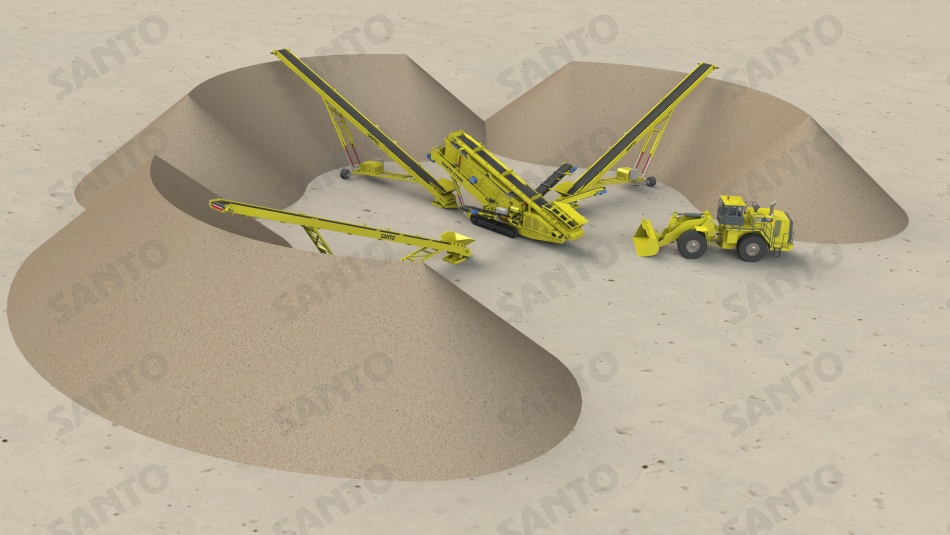
Why mobile stackers beat wheel loaders for mine stockpiling: lower cycle cost, simpler flow,…
Learn more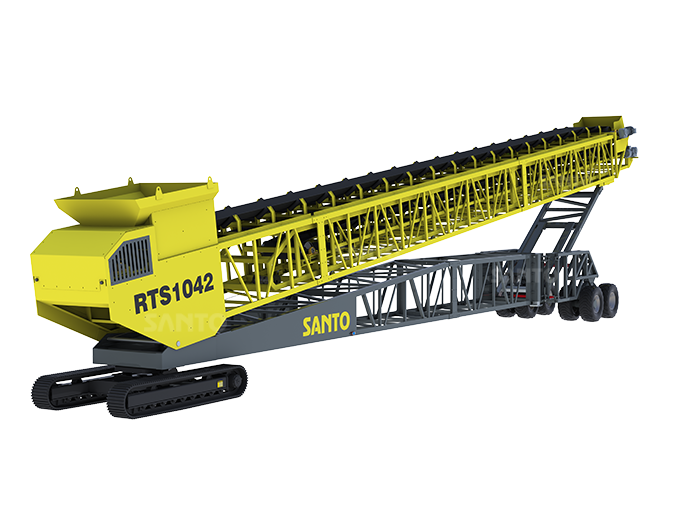
The main types of mobile conveyors: wheeled, tracked, telescopic, radial, stacker, swivel, and…
Learn more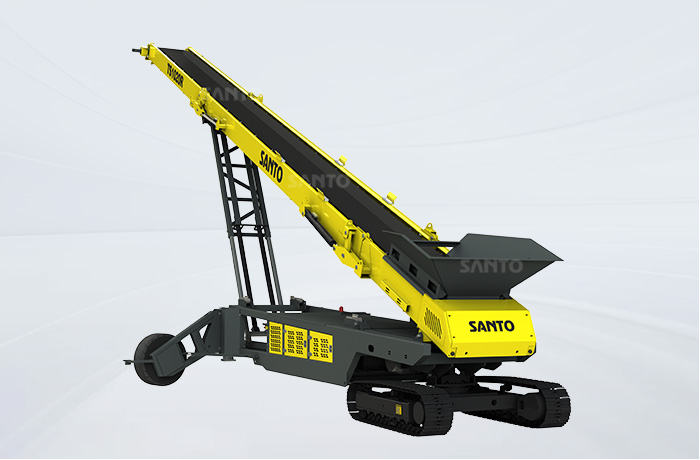
Tracked radial stacker with full 360° slew, 20-30 m belt and up to 1000 t/h. Builds large…
Learn moreSend us your material, required capacity and site layout. SANTO engineers will size the equipment and return a configuration proposal within 12 hours — no obligation.