Radial Telescopic Conveyors for Ship Loading Operations
Why radial telescopic conveyors suit ship loading: wide coverage from one base, no-stop point…
Learn more
Practical loading layouts built from mobile conveyors, matched to berth, yard, and vessel conditions.
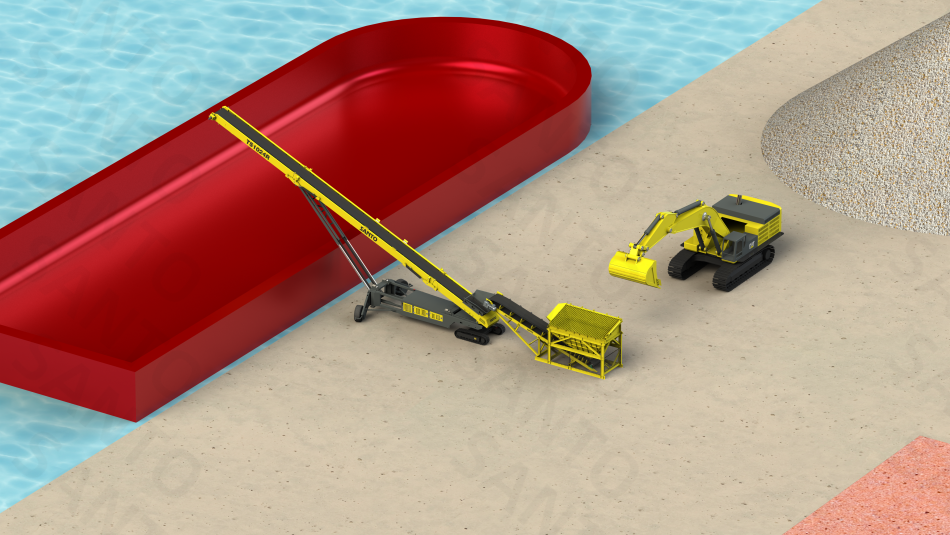
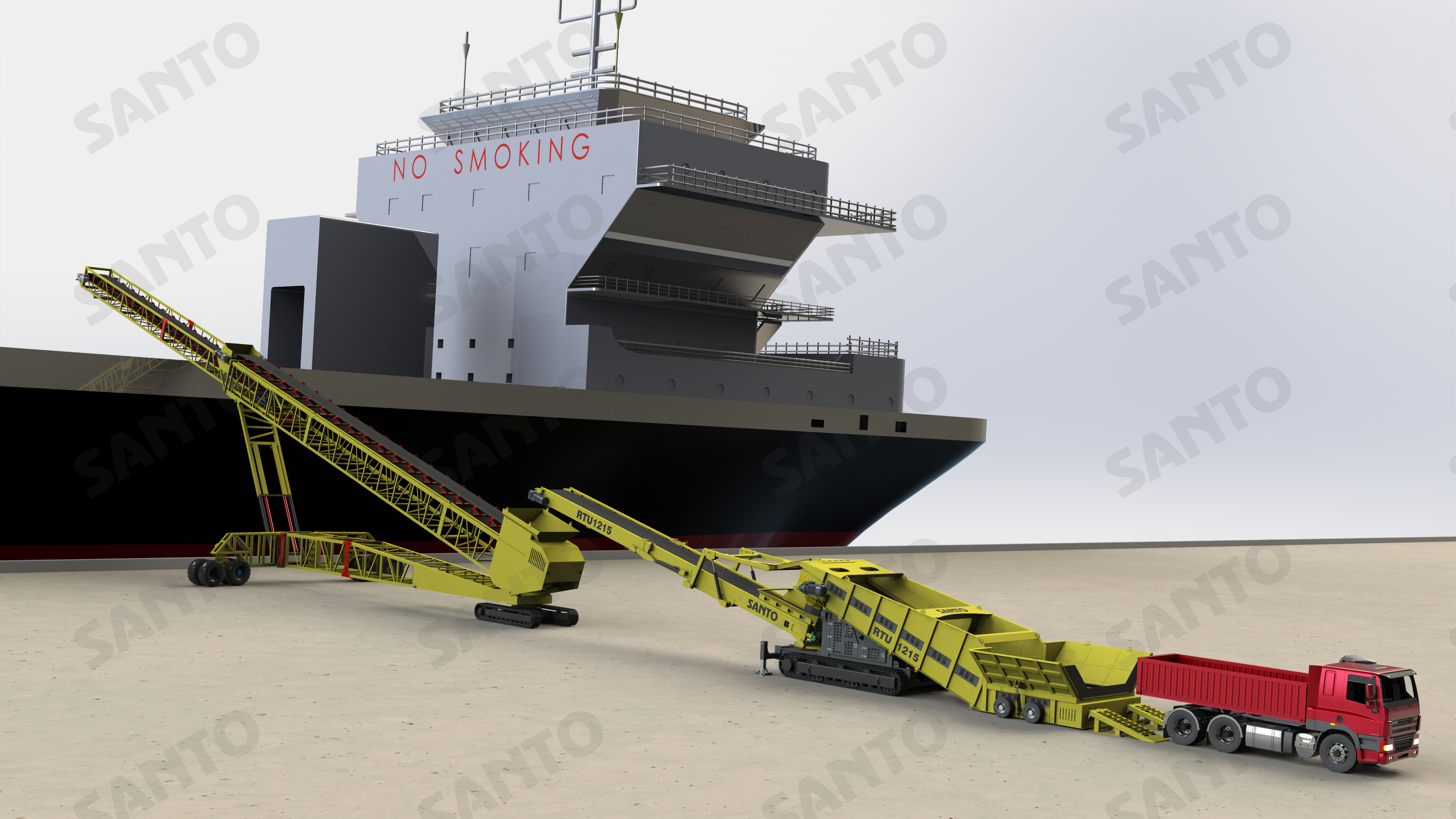
Mobile conveyors support several ship-loading layouts, from a single shore-based unit to a relay of machines along a narrow quay. The right layout depends on where cargo is stored, how scattered it is, and how much quay space is available. The radial telescopic conveyors for ship loading show the most capable single-unit form of these layouts.
The mobile conveyor sits on the shore with its boom extended over the hatch, receiving from the stockyard and carrying cargo continuously to the ship. It fits when cargo is shore-side and the berth is close and fixed in position.
Advantages are high efficiency and simple layout: continuous transport with easy operation and maintenance. Coal and ore yards commonly load this way because the pile is already at the water and the hatch is near the stockyard.
Several mobile conveyors shuttle inside a large, scattered yard to gather cargo from many points to the shore loader. Routes and positions flex with the pile and the loading progress as the day goes on at the terminal.
This lifts yard-space use and lets conveyors deploy to where material actually sits, raising loading flexibility at big multipurpose terminals where several commodities share the ground at once during the working week.
At a narrow old quay, a row of mobile conveyors forms a relay: each passes cargo to the next until it reaches the ship. Speed and direction adjust per section to keep flow smooth from yard to hold without a wide apron.
The relay carries material long distances within limited space and spreads wear across shorter, lighter duty sections, lowering failure rate on a quay that cannot fit a single large fixed loader in the available width along the front.
| Layout | Best when |
|---|---|
| Direct shore | Cargo near a fixed berth |
| Yard shuttle | Large, scattered yard |
| Quay relay | Narrow quay, long distance |
| Ship-carried | Small or inland vessels |
A small mobile conveyor rides on the vessel and extends to shore or yard after berthing, suiting small ports or inland shipping with frequent, low-volume calls from many different terminals along the river or canal.
Loading stays flexible because the ship sets its own position and pace, and the terminal needs less large fixed equipment. The mobile ship loading conveyor advantages are clearest where calls are small and frequent rather than large and rare at the berth.
Start from the yard: scattered and large points to a shuttle; narrow and long points to a relay; fixed and close points to direct shore. Match the machine count to the peak load, not the average, so the berth never waits on a queue.
SANTO engineers tailor the plan to the berth, cargo, and vessel mix, because the best loading solution is the one fitted to the site. The why choose mobile ship loaders case rests on this fit and the speed of install it allows at the terminal.
Yard shuttle, where several conveyors gather cargo from many points.
A quay-front relay that carries material far within limited width.
Yes, small or inland vessels can extend a unit to shore after berthing.
Yes, engineers tailor the plan to site, cargo, and vessel.
Why radial telescopic conveyors suit ship loading: wide coverage from one base, no-stop point…
Learn more
Why mobile ship loading conveyors beat fixed loaders: flexible positioning, continuous…
Learn more
Five reasons to choose mobile ship loaders: lower capital, faster lead time, quick install,…
Learn more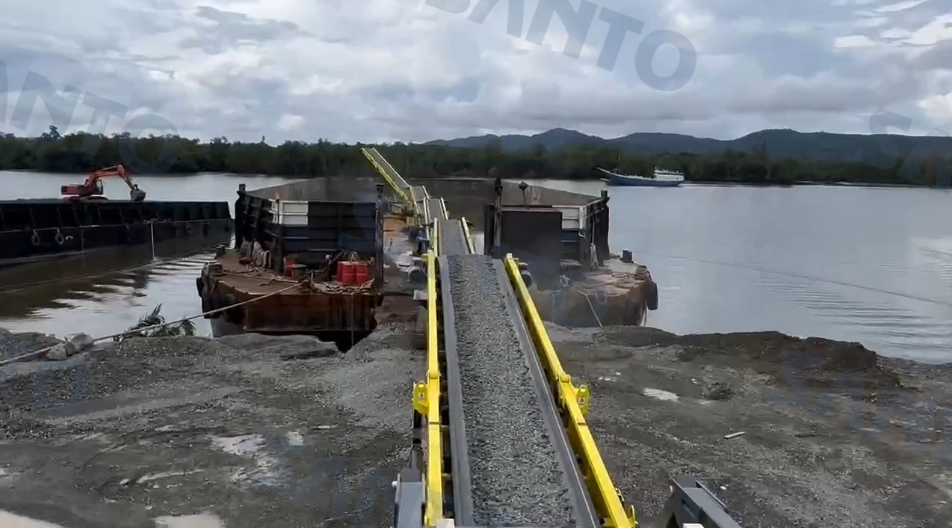
Mobile ship loader on wheels or tracks for coal, ore, grain and cement at ports. High…
Learn moreSend us your material, required capacity and site layout. SANTO engineers will size the equipment and return a configuration proposal within 12 hours — no obligation.