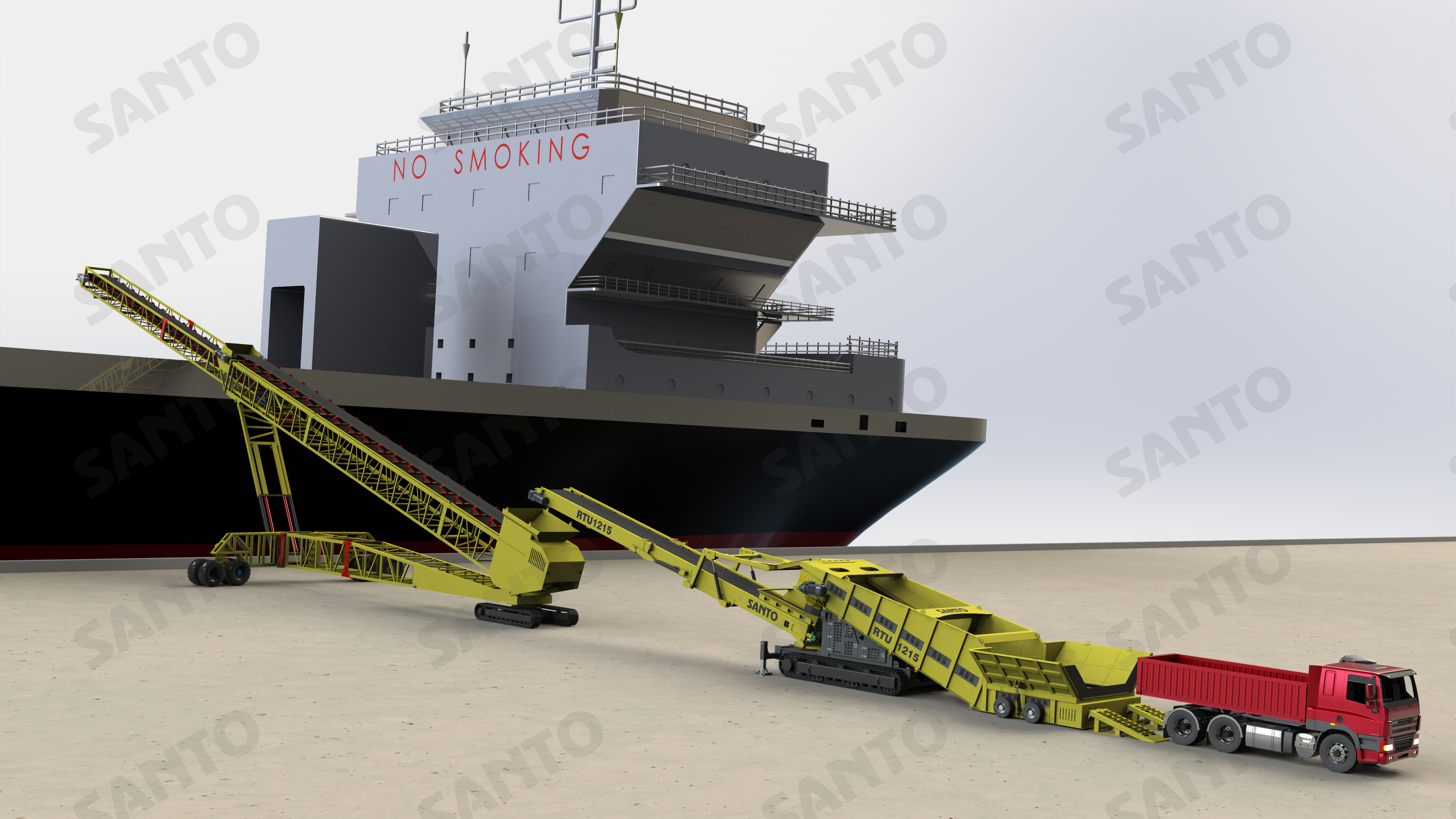
Radial Telescopic Conveyors for Ship Loading Operations
Why radial telescopic conveyors suit ship loading: wide coverage from one base, no-stop point…
Learn more
How adjustable-reach telescopic stackers are reshaping bulk ship loading at modern terminals.
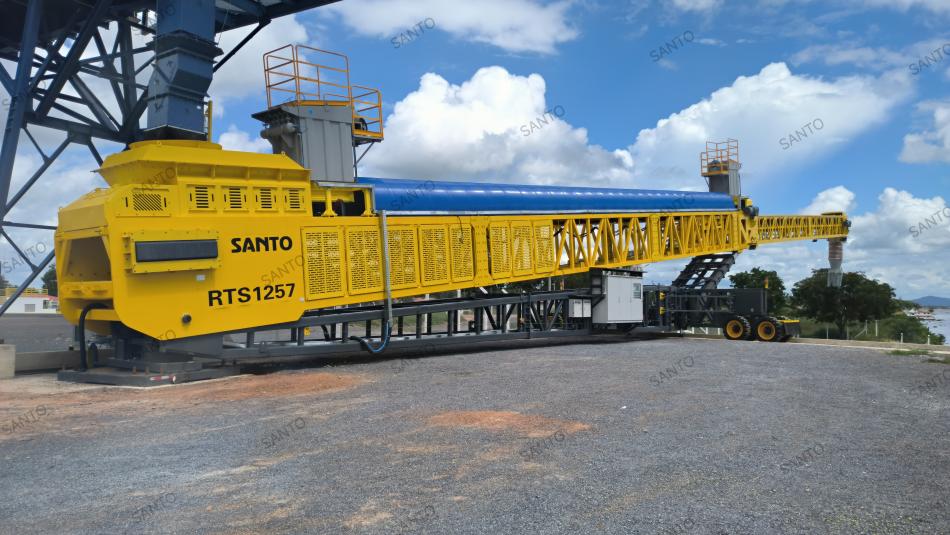
A telescopic stacker is a mobile, radial-slewing conveyor whose boom extends and retracts to place bulk material deep inside a ship hold without repositioning the whole machine. In ports and terminals it has become core equipment for loading coal, ore, grain, and fertilizer because it raises loading efficiency while cutting dust and rehandling. The radial telescopic conveyors for ship loading apply the same boom logic at the quay with even wider coverage.
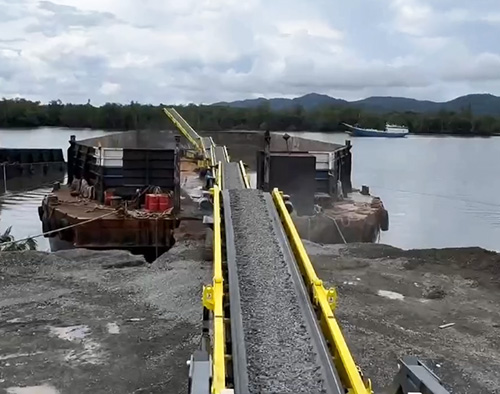
The defining feature of a telescopic stacker is its adjustable boom. A single unit serves barges and ocean-going bulk carriers alike: the operator sets the extension length and the belt delivers material to several positions within the hold, removing the need to move the machine repeatedly between load points during a long shift.
This reach also compensates for changing site conditions. Tidal variation, shifting water levels, and uneven hatch heights are handled by adjusting conveying distance, inclination, and discharge height rather than re-laying foundations. Spillage and uneven pile formation drop, protecting cargo value and lowering manual cleanup time on the vessel.
Because one machine covers many hatch positions, the terminal needs fewer loaders on the quay and fewer operators exposed to the edge of the hold. That safety and labor gain is part of why the radial telescopic conveyor for ship loading is now specified at new bulk terminals from the design stage.
Telescopic stackers handle both heavy and light bulk. Iron ore, nickel ore, and coal move on reinforced belts, while grain, feed, wood chips, and fertilizer ride on gentler configurations that limit breakage and cross-contamination between batches at the terminal during a busy season.
Many terminal units run on a rail-moving structure so they travel along the quay to switch berths quickly. This expands the working envelope of a single machine and lets one stacker serve several ships during a peak loading window, improving quay utilization and berth turnover for the port without a second fixed loader.
Environmental rules at green ports push enclosed conveying. Sealed belts, telescopic dust covers, and dedicated loading chutes keep material contained from stockyard to hold, suppressing dust at the transfer and discharge points along the belt path where it normally escapes.
Because the stacker places material precisely, less product is lost overboard or on the deck, and less cleanup labor is required. Lower spillage also means lower material loss cost over a season of operation, which matters for both profit and permit compliance at the terminal under tighter emission limits.
The same enclosed design helps with odor and pest control for grain and fertilizer, so one machine supports several cargo classes at a multipurpose terminal. The mobile ship loading conveyor advantages of clean transfer are strongest when the belt and chute are specified together with the boom.
SANTO telescopic stackers are built to customer duty. Maximum hourly capacity reaches 3,500 tons and the extended boom can reach 58 meters, matching a wide range of vessel sizes and bulk loading volumes across a working season without changing the base machine.
All operating parameters are configurable: belt width, boom length, slewing angle, and power source are selected against the material and the berth layout. The result is a unit tuned to the terminal rather than a generic compromise that wastes capacity or energy on every cycle of the loader.
| Parameter | Typical range |
|---|---|
| Belt width | 650 - 1600 mm |
| Extended length | up to 58 m |
| Capacity | up to 3,500 t/h |
| Slew | up to 180 degrees or 360 degrees |
| Power | electric, diesel, or dual |
A good specification starts with the vessel mix and the cargo. A terminal loading mostly coal and ore needs a wider, reinforced belt and a higher capacity drive than one handling grain and fertilizer, where gentle flow and clean separation matter more than raw tons per hour.
The supplier choice should follow this duty study. SANTO engineers size the boom, slew, and power so the stacker matches the berth rather than forcing the berth to fit the machine, which protects both throughput and budget across the life of the equipment at the port.
For operators comparing options, the case for mobile ship loaders rests on exactly this fit: lower capital, faster install, and one machine that serves many berths instead of a fixed system locked to a single quay line.
From short-distance barges to large ocean-going bulk carriers. The adjustable boom and slewing base let one machine serve many vessel sizes and hold layouts.
Sealed conveyor belts, telescopic dust covers, and loading chutes enclose the material path, cutting emissions at transfer and discharge points.
Rail-mounted versions travel along the quay to switch working berths quickly, so one stacker can serve several ships in a loading window.
Up to about 3,500 tons per hour with an extended boom of up to 58 meters, configurable to the material and berth.
Why radial telescopic conveyors suit ship loading: wide coverage from one base, no-stop point…
Learn more
Why mobile ship loading conveyors beat fixed loaders: flexible positioning, continuous…
Learn moreSANTO mobile ship loaders and radial stackers cut vessel load/discharge times in ports and…
Learn more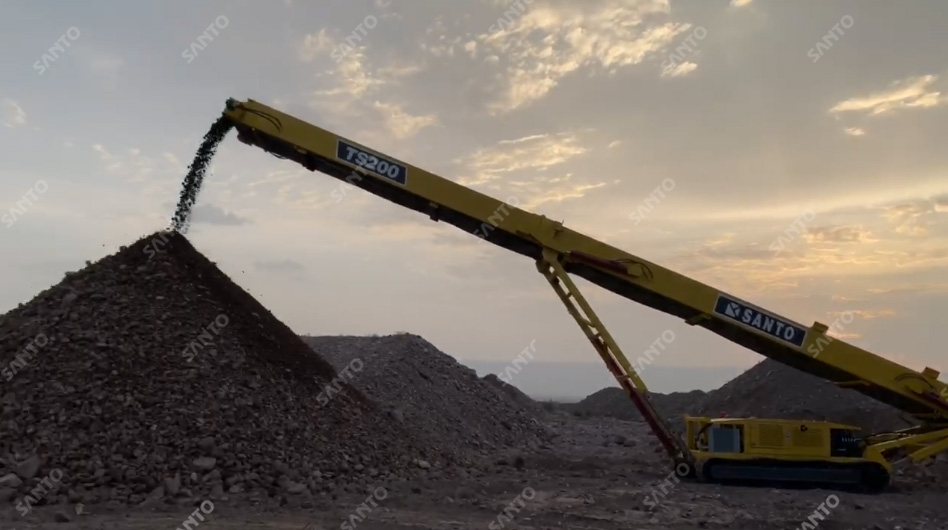
Five reasons to choose mobile ship loaders: lower capital, faster lead time, quick install,…
Learn moreSend us your material, required capacity and site layout. SANTO engineers will size the equipment and return a configuration proposal within 12 hours — no obligation.