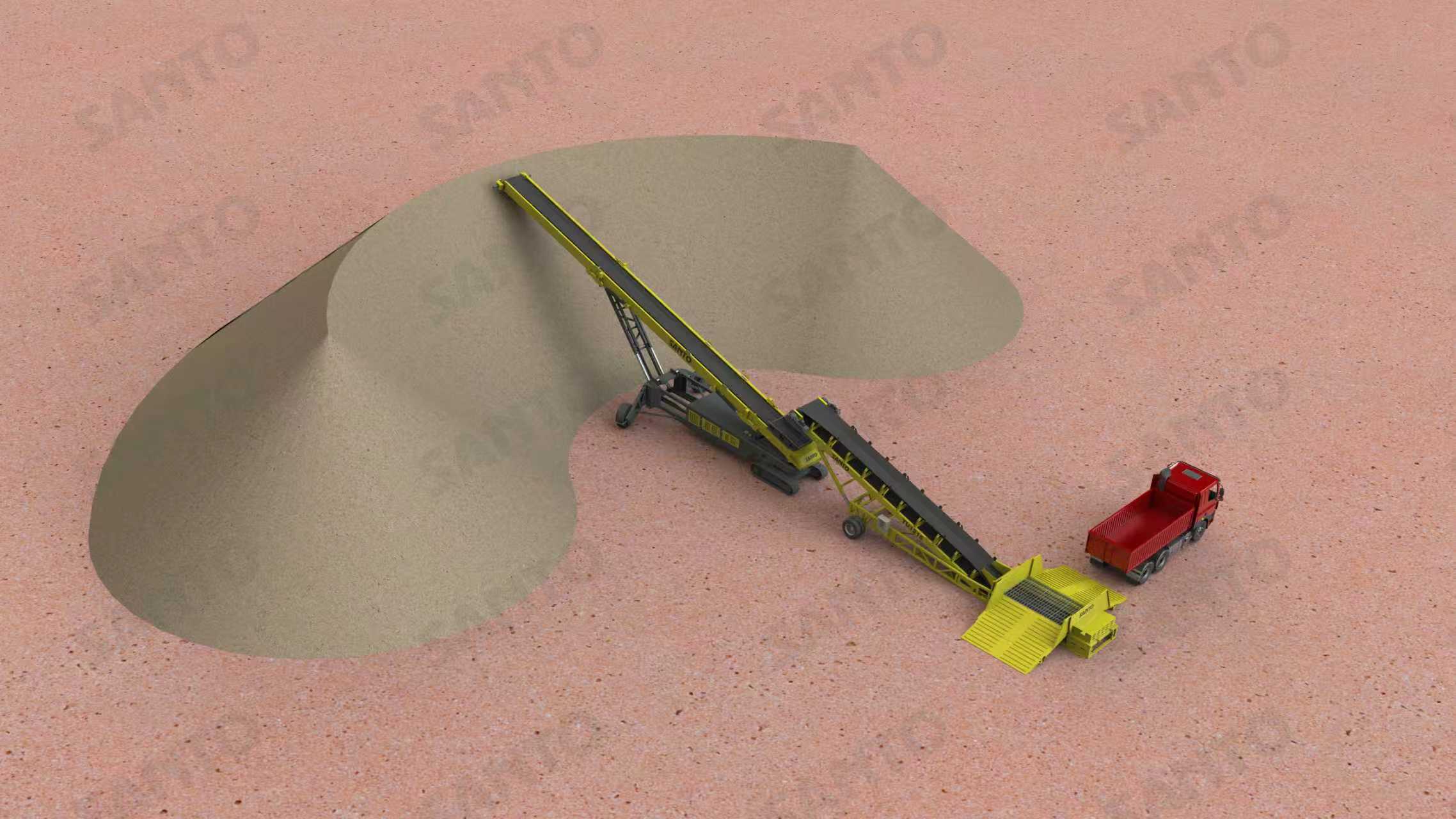
Advantages of Mobile Conveyors for Stockpiling
Why mobile conveyors win at stockpiling: taller neater piles, no transfer breakpoints, lower…
Learn more
A cost and workflow comparison of mobile stackers against traditional loaders at the mine stockyard.
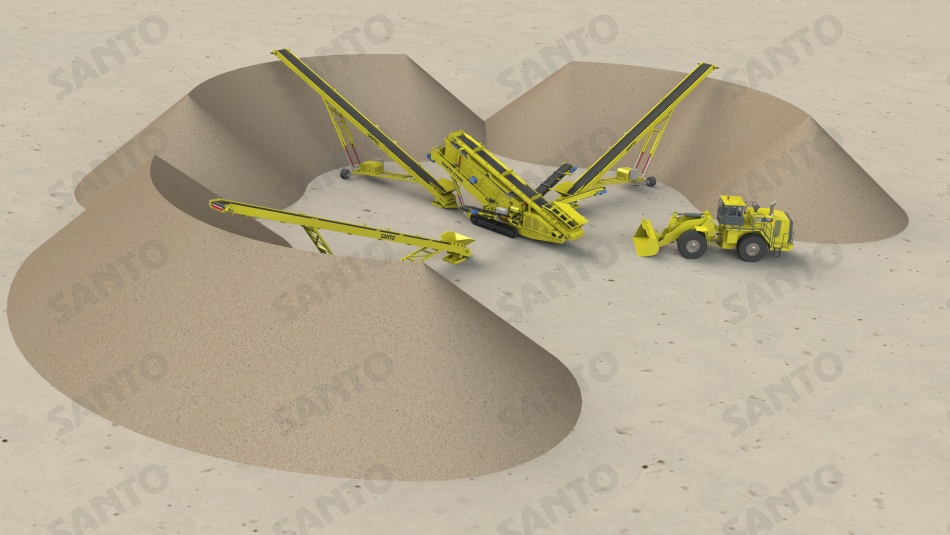
In mining stockpiling, mobile stackers increasingly replace wheel loaders because they link the crusher directly to the pile, cutting fuel, wear, and handling steps. The advantage shows in three areas: total cycle cost, workflow continuity, and long-term sustainability. The advantages of mobile conveyors for stockpiling build on the same logic of direct, continuous flow.
Loaders make many trips moving material from source to pile, burning fuel on each run. A mobile stacker connects the flow directly, so fuel per ton stacked drops sharply across the whole stockyard operation from the first day.
Stackers have fewer wearable parts and a simpler structure than loaders, lowering maintenance demand. Over a season this reduces both parts spend and unplanned downtime that stalls the crushing and stacking loop at the mine when output is needed.
The cost gap widens with scale. At a few hundred tons per shift the loader still competes, but past a modest threshold the stacker’s steady belt beats repeated loader cycles on fuel and labor every time the volume rises at the face.
Without a stacker, loaders perform the combined task of transfer plus stockpiling, which competes with their other duties around the site. With a mobile stacker, upstream equipment such as crushers feeds the pile directly and continuously without a shuttle.
This removes scheduling gaps between machines and keeps a continuous stockpiling rhythm. The pile builds at the rate of production rather than at the rate of loader availability, which is the real productivity gain on a busy face with one crusher.
| Step | With loader | With stacker |
|---|---|---|
| Transfer | Repeated loader trips | Direct belt feed |
| Stockpile | Loader re-handles | Continuous stacking |
| Scheduling | Shared with other tasks | Dedicated flow |
Low energy use and minimal maintenance give stackers a smaller carbon footprint across their life than high-consumption loaders. Less replacement and repair also cuts wasted resources and the logistics of spare parts to the remote site.
For mines pursuing green operations, the stacker aligns with low-carbon targets while still raising throughput. It is a better fit for long-term, repeatable stockpiling than intermittent loader cycles that spike fuel use at peak loading each afternoon.
Loaders remain useful for clean-up, bin filling, and irregular short moves. The point is not to delete loaders but to stop using them for the bulk transfer that a conveyor does more cheaply and more safely on the pile.
SANTO sizes mobile stackers to mine stockpiling so the conveyor carries the continuous load and loaders handle only the exceptions. The tracked radial stacker is a common choice for rough-ground yards where reach and pile shape matter most.
To decide, model fuel, labor, maintenance, and downtime for a loader fleet against a stacker plus one loader for exceptions. Most mines find the stacker wins on cost per ton once volume passes a modest threshold that is easy to estimate.
The saving grows with yard size and shift count, because the conveyor runs the same load while loader hours and wear fall. A tailored layout turns the comparison from opinion into a measured, defensible number for the budget review.
Not entirely. Loaders stay for clean-up and odd moves; stackers take the continuous bulk transfer.
Fuel and maintenance, by removing repeated loader trips and simplifying the mechanism.
Yes, lower energy per ton and fewer replacements cut lifecycle emissions.
Yes, engineers configure reach, capacity, and mobility to the mine duty.
Why mobile conveyors win at stockpiling: taller neater piles, no transfer breakpoints, lower…
Learn more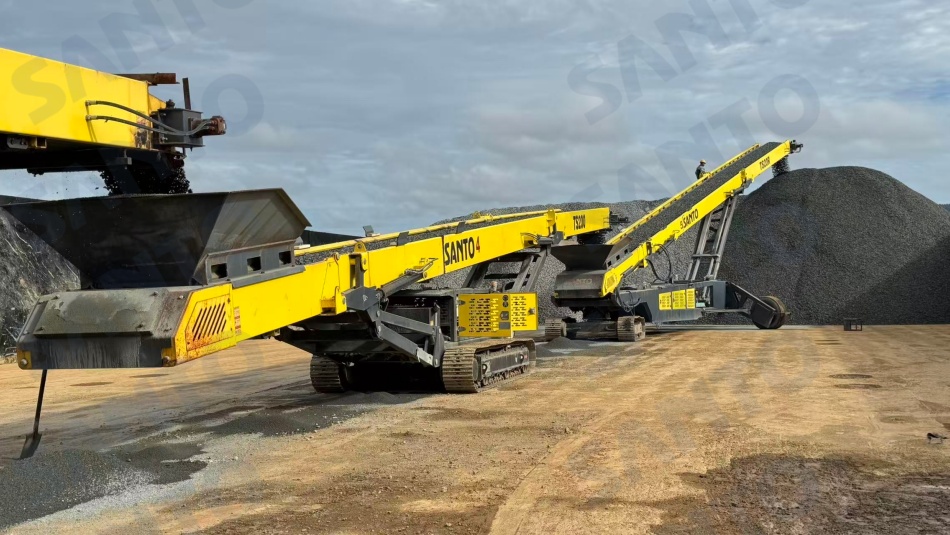
How mobile conveyors handle ore, coal, cement, port, and grain stockpiles: structure,…
Learn more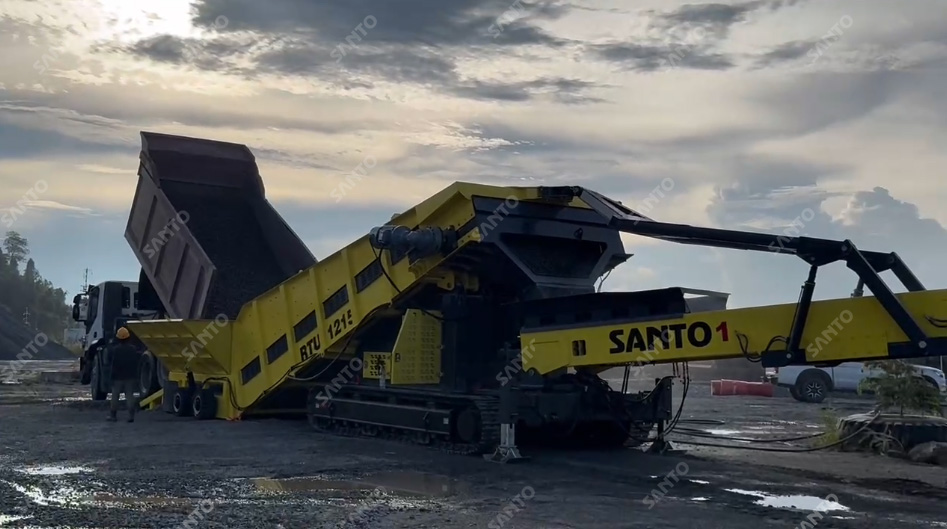
Why mines choose mobile conveyors: flexible displacement, seamless link to excavation, less…
Learn more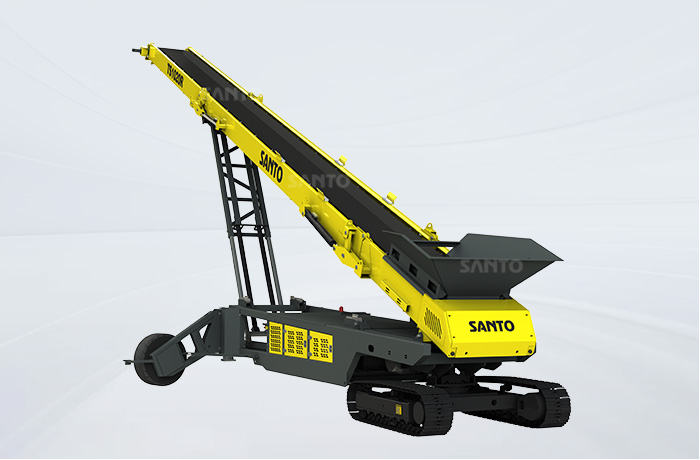
Tracked radial stacker with full 360° slew, 20-30 m belt and up to 1000 t/h. Builds large…
Learn moreSend us your material, required capacity and site layout. SANTO engineers will size the equipment and return a configuration proposal within 12 hours — no obligation.