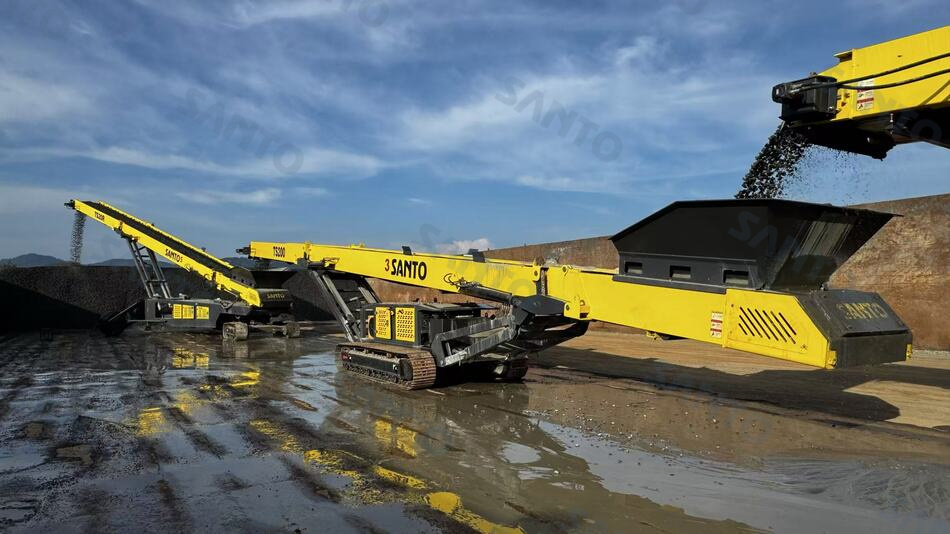
Mobile Conveyors and Mobile Crushing Plants
How pairing mobile conveyors with mobile crushers cuts cost and labor: continuous flow,…
Learn more
The mine-site reasons mobile conveyors keep replacing fixed lines and loaders.
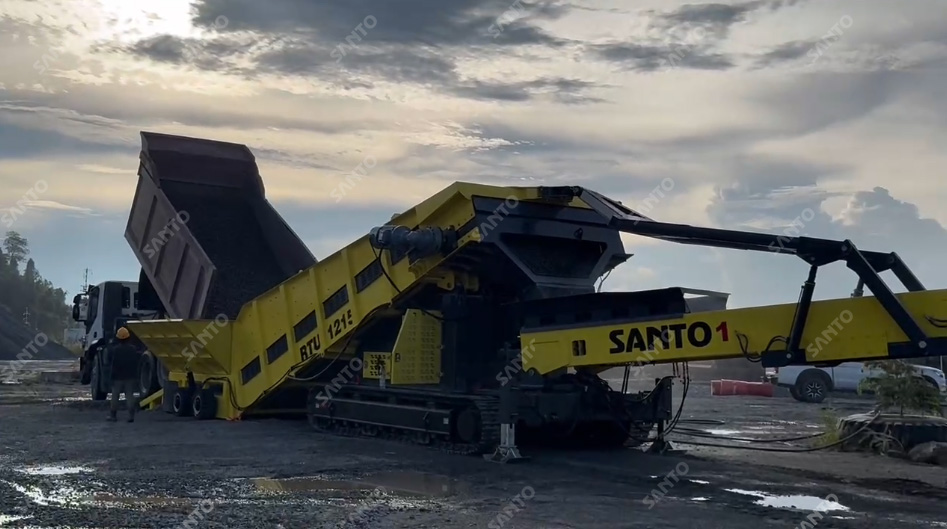
Mobile conveyors are popular in mining because they adapt to changing site needs and displace heavy machinery on demand. They link excavation to haulage seamlessly, cut on-site transport, lower labor risk, and improve energy per mined ton. The mobile conveyors and mobile crushing plants page shows the loop this creates at the face.
Mine requirements shift as the face advances, and mobile belts adapt by relocating whenever needed. This flexibility removes the workarounds a fixed system forces when geometry changes after the line was poured into the ground.
Because the conveyor moves with the operation, planning stays simple and the material path tracks the dig rather than the other way around, which keeps haul distance and its cost falling as the mine moves forward each month.
Modern mobile belts improve the link between excavation machines and overland haulage, so material flows without a loader shuttle. Fewer transport assets on site cut production cost directly from the first week of operation.
With less equipment moving about, labor intensity and accident danger fall, which matters on busy or confined mine layouts where people and machines share the same broken ground during the shift at the face.
Less transport equipment and higher efficiency lower energy per mined metric ton. While not yet optimal, this is clearly better for the environment than traditional methods that burn fuel in repeated loader cycles.
For these reasons mobile stackers are now a common choice across mining plants, and engineers can size one to the specific ore, ground, and flow so the saving shows on the books at the end of the season.
| Benefit | Mining effect |
|---|---|
| Flexibility | Follows the face |
| Fewer assets | Lower cost, less risk |
| Efficiency | Better energy per ton |
The same logic reaches the ship. A mobile conveyor loads the vessel as easily as it feeds the pile, so one format carries the ore from the dig to the hold without a change of handling philosophy at the transfer point.
The application of mobile conveyors in stockpiling shows the pile end of this chain, where the flexible belt becomes the buffer that lets the mine and the port each run at their own steady rate without a bottleneck.
Match chassis to ground and capacity to the face rate, then confirm the receiving system can take the belt at full speed. A conveyor that fits the mine earns from day one and moves on when the ore body shifts to a new pit.
The quarry and mining page collects the duty cases where this pairing pays back fastest, because the loop follows the dig and the haul distance, with its cost, falls as the operation advances forward each month of work.
Fixed lines force workarounds when the site geometry changes.
Yes, fewer loaders and haulers on site lower cost and risk.
They improve energy per ton versus traditional methods.
From face to crusher to stockpile and rail or truck load.
How pairing mobile conveyors with mobile crushers cuts cost and labor: continuous flow,…
Learn more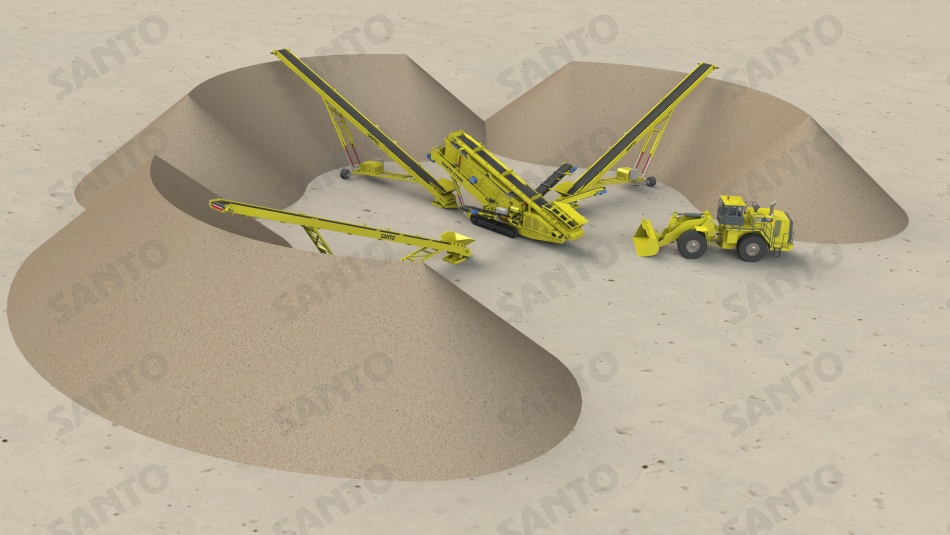
Why mobile stackers beat wheel loaders for mine stockpiling: lower cycle cost, simpler flow,…
Learn more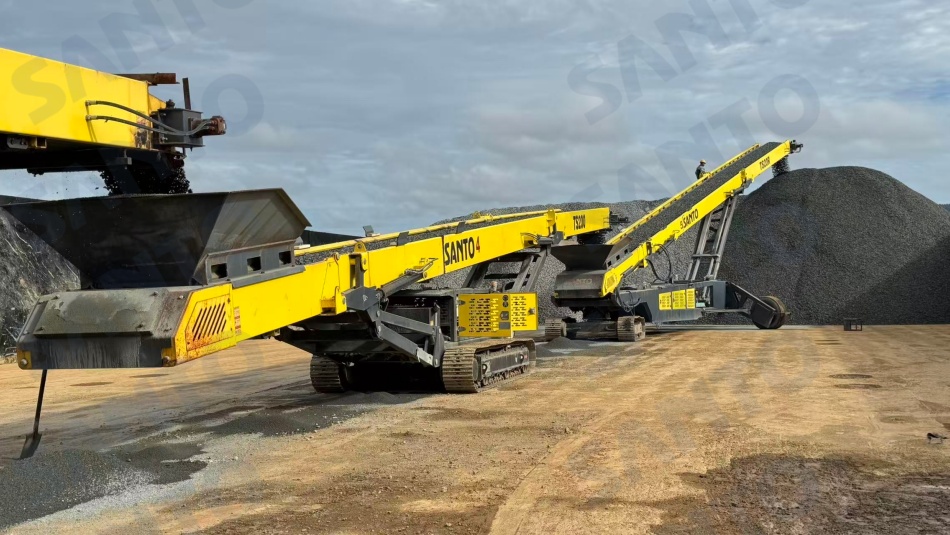
How mobile conveyors handle ore, coal, cement, port, and grain stockpiles: structure,…
Learn more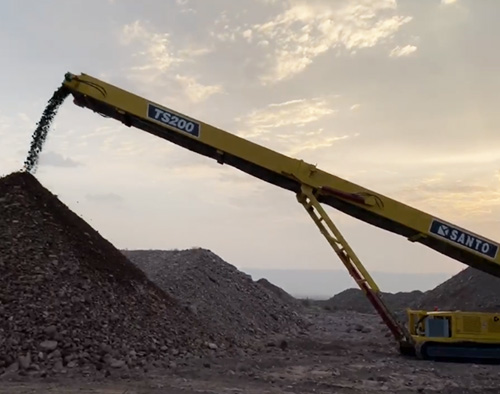
SANTO tracked stockpilers and mobile conveyors link crushers, screens and stockpiles in…
Learn moreSend us your material, required capacity and site layout. SANTO engineers will size the equipment and return a configuration proposal within 12 hours — no obligation.