Mobile Conveyors for Sale: A Complete Buying Guide
A buying guide to mobile conveyors for sale: types, features, mobility, and how SANTO matches…
Learn more
A tour of mobile conveyor types and how to pick the right one for terrain, load, and distance.
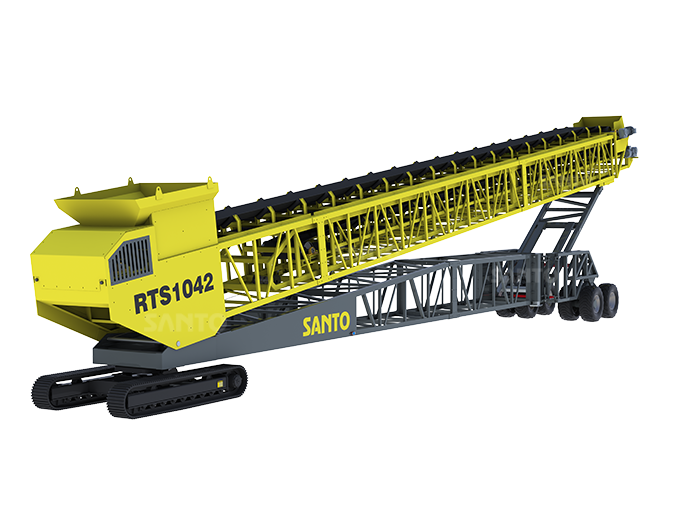
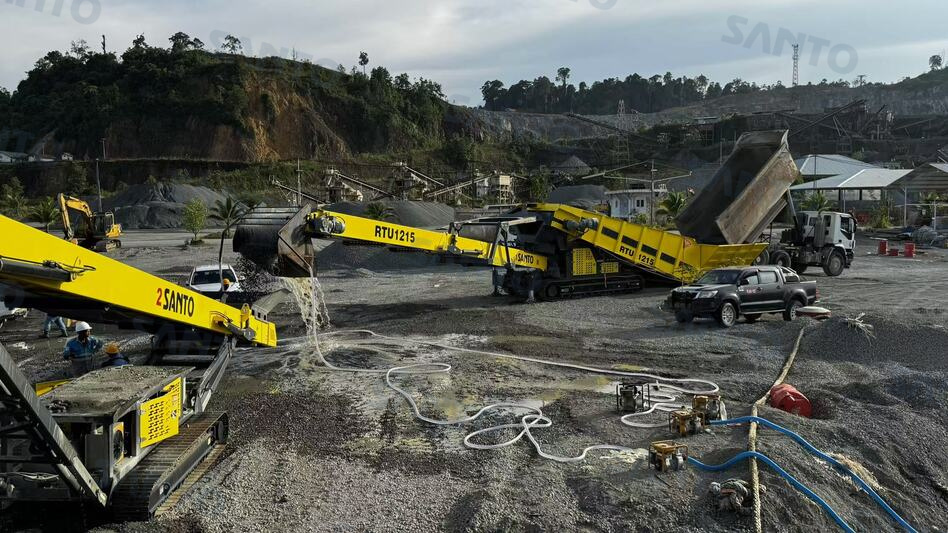
Mobile conveyors are versatile systems for bulk or goods over varying distances, used in mining, construction, ports, and agriculture. The main types differ by chassis and boom, and the right one follows terrain, load, and distance. The mobile conveyors for sale range covers these types as products you can buy.
Wheeled conveyors mount on tires for easy moves between sites and suit construction, mining, and ports that reposition often. They tow behind a truck or tractor and flex across environments without a low-loader and its permit.
Tracked conveyors use tracks for stability on rugged ground, ideal for heavy mining, forestry, or recycling with large material volumes and tough terrain where a wheeled unit would bog or break on the broken stone.
Telescopic conveyors extend and retract for loading or unloading at changing heights, cutting manual labor in bulk handling where the hatch or the pile moves through the day at the site.
Radial conveyors slew to stack material in a circular pattern for big, even piles that reclaim cleanly. Both suit ports and aggregate or recycling yards where reach and pile shape drive efficiency and the ground is limited.
| Type | Best for |
|---|---|
| Wheeled | Frequent flat-site moves |
| Tracked | Rugged heavy duty |
| Telescopic | Changing height load |
| Radial | Large even piles |
| Stacker | Material distribution |
| Swivel | Wide-area coverage |
Stackers adjust height for piles; swivel conveyors rotate to cover a wide area with little movement; container conveyors fit port and distribution loading; inclined conveyors climb slopes; overhead conveyors free floor space in the building.
Choose by terrain, load, distance, and portability: flat or rough ground, weight and type of material, short or long haul, and how often the unit relocates. Each type fits a specific task, so match it to the job rather than the catalog.
Match the chassis to the ground before the boom. A tracked unit on a sealed floor is over-spec; a wheeled unit in mud is under-spec, so the terrain test decides the chassis and the boom type follows from the duty at the site.
Resist feature creep. A telescopic radial stacker is superb for piles but overkill for a straight truck-to-hopper run, where a simple wheeled belt does the job for a fraction of the price and the upkeep on the machine.
The radial telescopic conveyor for ship loading is the most capable type and the most costly, so specify it only when reach and slew are truly needed at the berth and the vessel mix justifies the investment on the quay.
For most yards a wheeled or tracked belt with a fixed boom is enough, and the saving on the chassis can fund the belt grade and the cover that actually protect the material and the machine through the working season.
Tracked conveyors for stability and heavy load on tough terrain.
Radial conveyors that slew to stack in a circular pattern.
When load or unload height changes and reach must adjust.
By terrain, load, distance, and how often it moves.
A buying guide to mobile conveyors for sale: types, features, mobility, and how SANTO matches…
Learn more
A practical buyer guide to choosing a mobile conveyor: match material, capacity, belt size,…
Learn more
How mobile conveyors handle ore, coal, cement, port, and grain stockpiles: structure,…
Learn more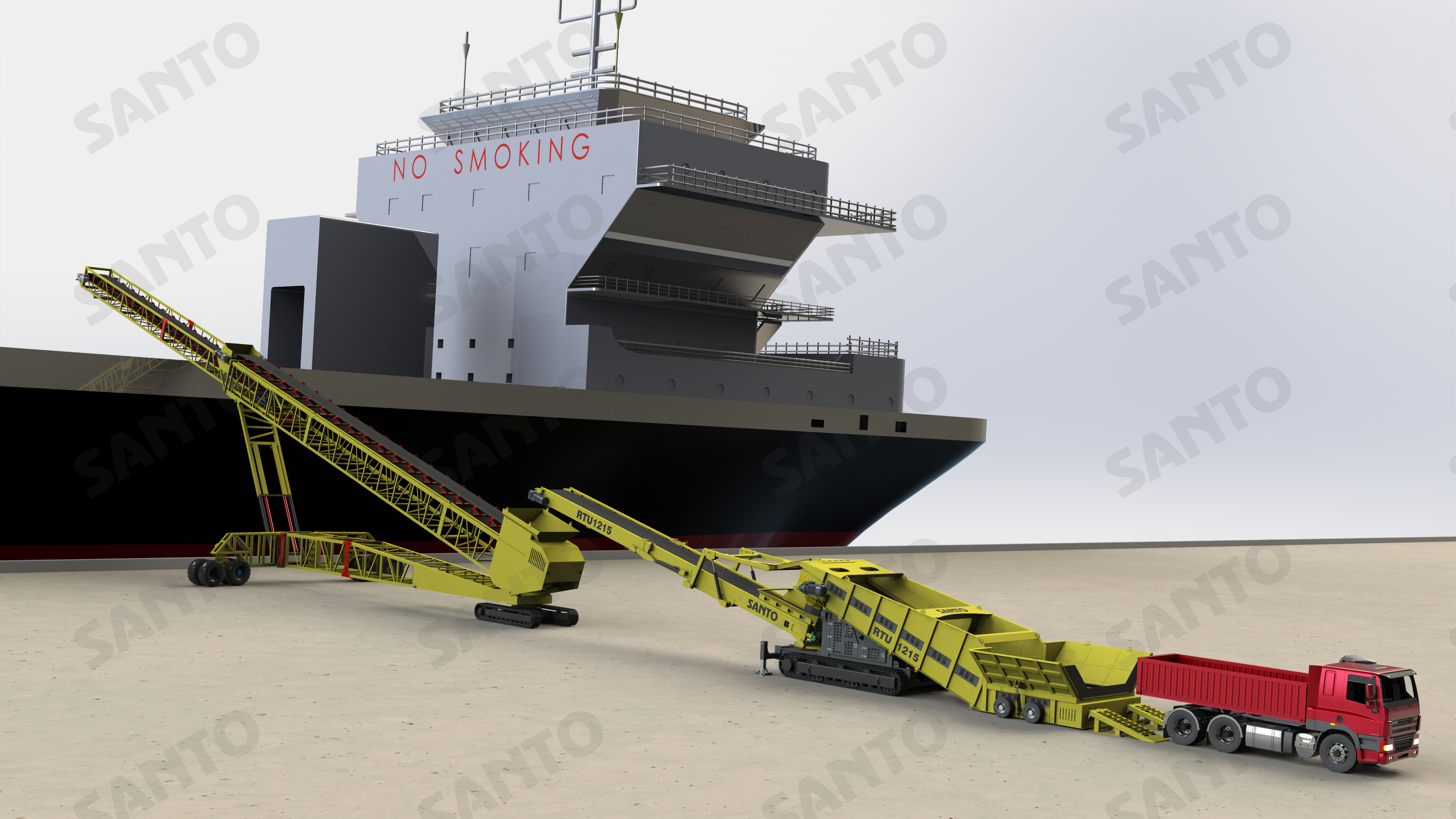
Why radial telescopic conveyors suit ship loading: wide coverage from one base, no-stop point…
Learn moreSend us your material, required capacity and site layout. SANTO engineers will size the equipment and return a configuration proposal within 12 hours — no obligation.