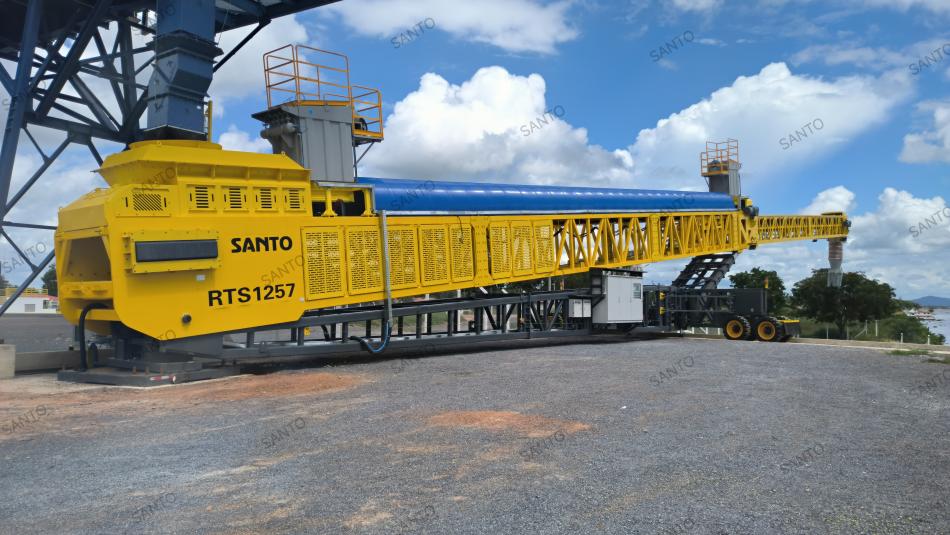
Application of Telescopic Stackers in Ports and Terminals
How telescopic stackers boost port and terminal ship loading with adjustable reach, dust…
Learn more
The systems behind a telescopic stacker and how they place bulk material without moving the machine.
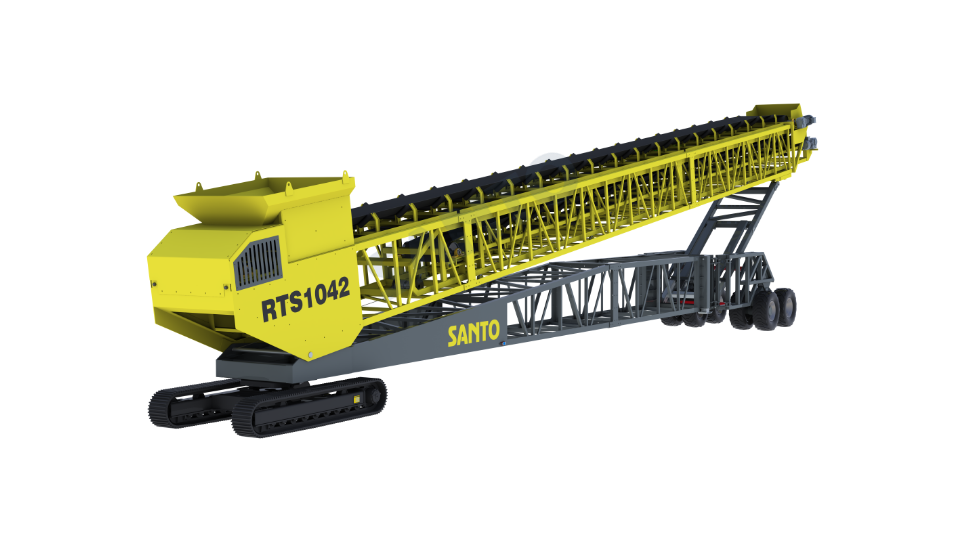
A telescopic stacker is a self-propelled unit with a boom conveyor that extends and retracts to load, unload, and stack bulk material at a changing reach. It works through integrated hydraulic, electrical, and mechanical systems that position the boom and carry the belt. The application of telescopic stackers in ports shows the berth form of this machine.
The machine rides on a wheeled or tracked base so it reaches the stockpile or quay and stays put while working. The telescopic boom is a series of linked belt sections that slide to change length as the duty requires.
Because the boom extends, the discharge point moves outward without relocating the base, which is what lets one position serve a wide pile or a deep hold without moving the whole heavy machine between loads.
Hydraulic systems drive boom movement and positioning, including lift and slew where fitted. Electrical systems power the belt and control smooth start, stop, and speed for a steady, safe run on the belt.
Mechanical conveyance carries material from feed to discharge. The three systems integrate so the stacker reaches, places, and stacks with repeatable precision that a manual method cannot hold across a long shift.
| System | Role |
|---|---|
| Hydraulic | Boom move and position |
| Electric | Belt drive and control |
| Mechanical | Material conveyance |
Material feeds at the tail, the belt carries it along the extended boom, and the discharge places it at the set point. Adjusting extension and angle changes the pile shape without stopping the belt during the cycle.
For loading, the same cycle reaches into a hold; for stacking, it builds radial or conical piles. The result is efficient, versatile handling from one machine that the operator tunes from the control panel on site.
Control logic ties it together. Sensors on boom position and belt load let the stacker auto-limit speed near the end of travel, preventing the jerk that spills material and fatigues the structure over a long, busy shift.
The radial mobile telescopic conveyor applications add slew to the same boom, so one machine both reaches and circles the pile it builds, which is the production version most yards actually buy and run.
Power options follow the site. Electric suits a berth with supply; diesel or dual suits a remote barge landing, and the same boom works either way because the drive only changes at the motor, not the mechanism of the unit.
The radial telescopic stockpiler product shows the production version, where the slewing base is added to the telescoping boom so the machine serves both the pile and the hold from one parked position on the ground.
Linked belt sections slide hydraulically to lengthen the boom.
No, the base stays put while the boom extends to the point.
Hydraulics for movement, electric for belt and control.
Yes, the same cycle serves both by changing reach and angle.
How telescopic stackers boost port and terminal ship loading with adjustable reach, dust…
Learn more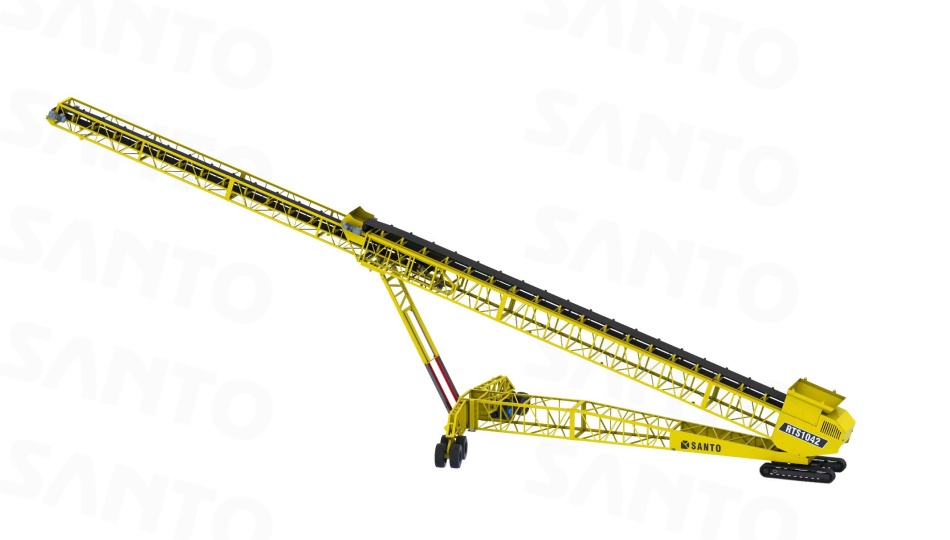
Explore radial mobile telescopic conveyors: how they work, where they are used in ports,…
Learn more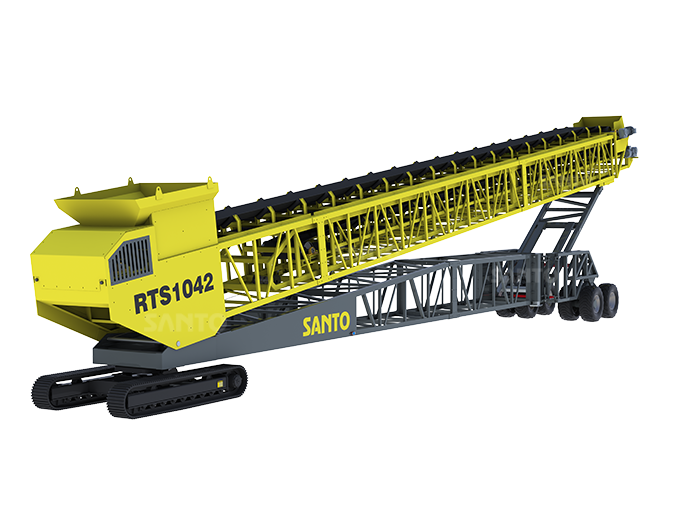
The main types of mobile conveyors: wheeled, tracked, telescopic, radial, stacker, swivel, and…
Learn more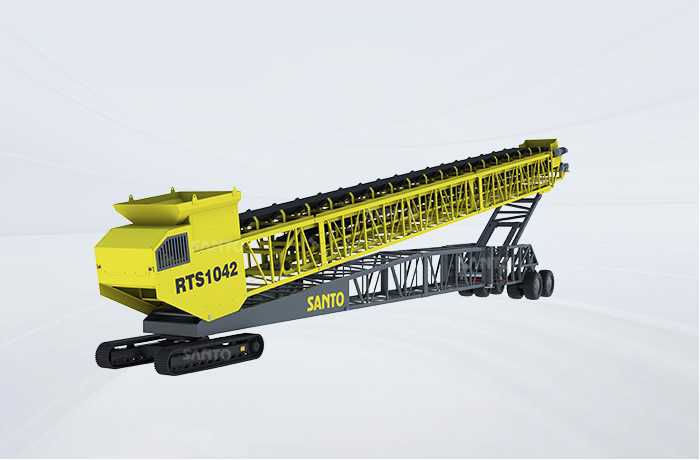
Radial telescopic stockpiler with extendable boom, 42 m reach, 14.5 m height and 700 t/h.…
Learn moreSend us your material, required capacity and site layout. SANTO engineers will size the equipment and return a configuration proposal within 12 hours — no obligation.