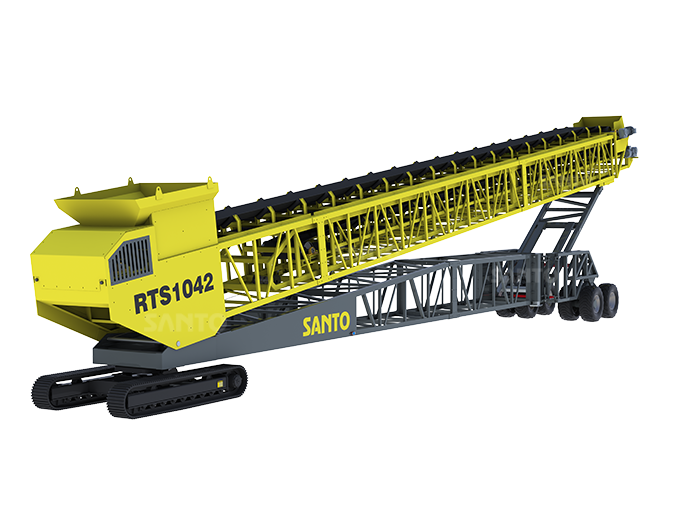
Types of Mobile Conveyors
The main types of mobile conveyors: wheeled, tracked, telescopic, radial, stacker, swivel, and…
Learn more
What to look for when buying a mobile conveyor, and the SANTO range that covers most bulk duties.
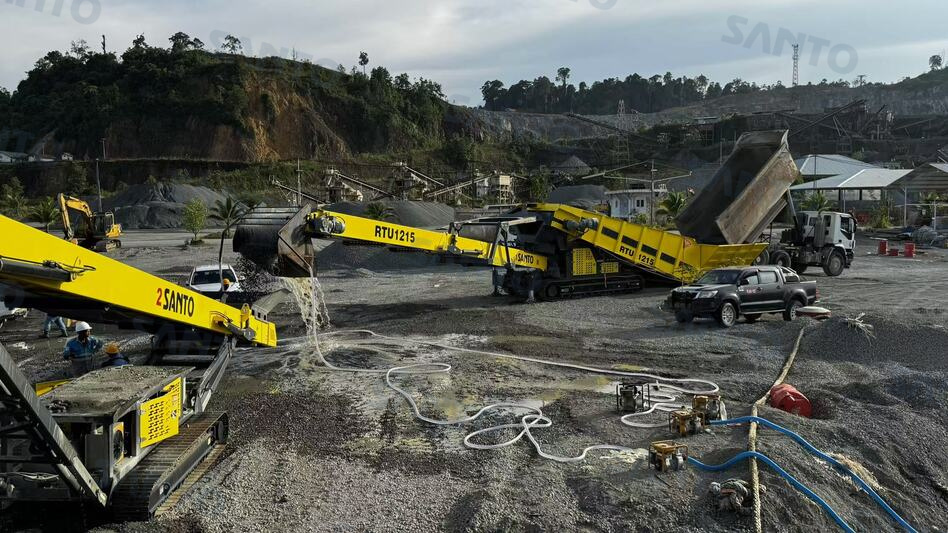
Mobile conveyors for sale are relocated belt units that move material between changing work sites without fixed foundations. Unlike fixed conveyors they install and redeploy fast, which is why mines, construction, logistics, and agriculture rely on them where positions shift often. The types of mobile conveyors guide explains the chassis choices behind the range.
Mobility comes from wheels or tracks, letting the unit roam flat yards or rough ground with no civil base. Within hours it relocates to the next duty instead of being rebuilt for a new position on the site.
Flexibility lets the position and angle adapt to terrain and condition. Modern units add electric drive, auto speed, and smart control for high automation and productivity, which lowers the labor needed to run the belt.
SANTO builds wheeled, tracked, radial, telescopic, feeder, and truck-unloading mobile conveyors to cover bulk handling needs. Each solves a distinct step: feed, stack, slew, extend, or unload in the flow.
Choosing among them is less about a single best model and more about the step in the flow: a radial stacker for piles, a telescopic for reach, a feeder for direct crusher feed, and a truck unloader for receiving at the gate.
| Type | Primary job |
|---|---|
| Wheeled | Fast flat-yard moves |
| Tracked | Rough or soft ground |
| Radial | Even large piles |
| Telescopic | Long reach, ship hold |
| Feeder | Crusher or hopper feed |
| Truck unloader | Bulk from trucks |
For twenty years SANTO has developed and built mobile conveyors, exported to more than sixty countries from sand and gravel haulage in mines to bulk loading at ports, with references in each sector worldwide.
The range gives complete solutions with low environmental impact, and engineers size each unit to the material, site, and flow rather than offering a one-size option that fits none of them well in practice.
Match type to the step, confirm capacity and ground, then weigh build quality and support against price. A unit that fits the duty costs less per ton moved than a cheaper mismatch that idles or spills at the pile.
The mobile conveyors best price view repeats this: the right price is a configured quote, not a low catalog line. Contact SANTO for model detail and a configuration that meets the site, since the best unit is specified, not just selected.
A conveyor rarely works alone. At the receiving end a mobile truck unloader feeds it; at the process end a crusher feeds it; at the pile a stacker is the same belt with a boom, so the purchase is part of a loop.
The mobile conveyors and mobile crushing plants page shows the loop in action, where the conveyor keeps pace with the crusher so material never stalls between stages and the whole line runs at one rate from feed to pile.
They install and relocate fast with no foundation, suiting changing sites.
Wheeled, tracked, radial, telescopic, feeder, and truck-unloading conveyors.
Modern units offer electric drive, auto speed, and smart control.
Match type to the flow step, then capacity and ground, then value.
The main types of mobile conveyors: wheeled, tracked, telescopic, radial, stacker, swivel, and…
Learn more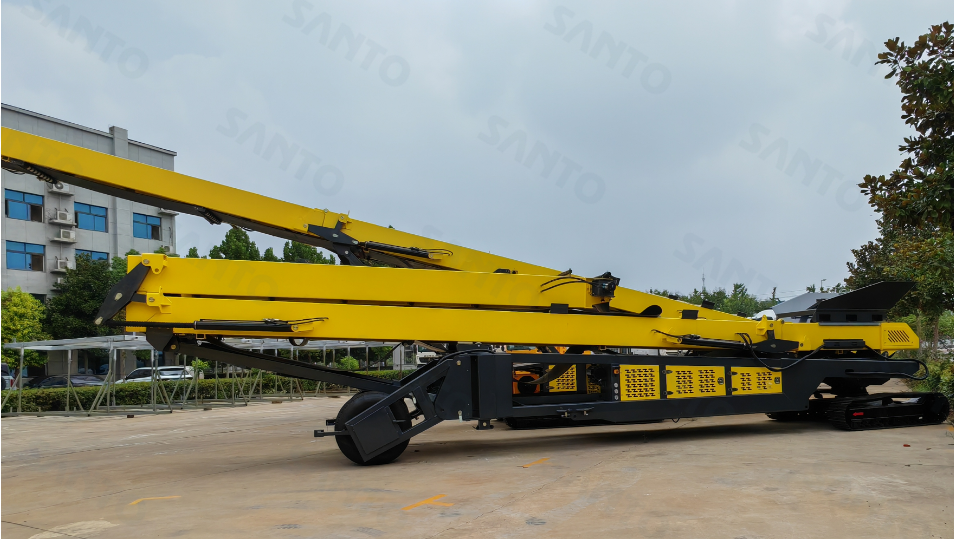
Tips to secure the best mobile conveyor price: match type and capacity, weigh lifecycle cost,…
Learn more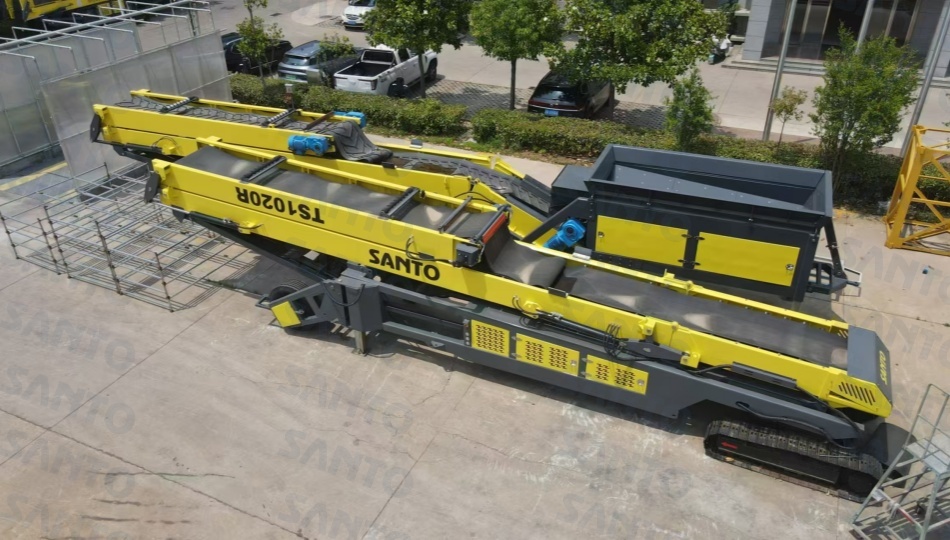
A practical buyer guide to choosing a mobile conveyor: match material, capacity, belt size,…
Learn more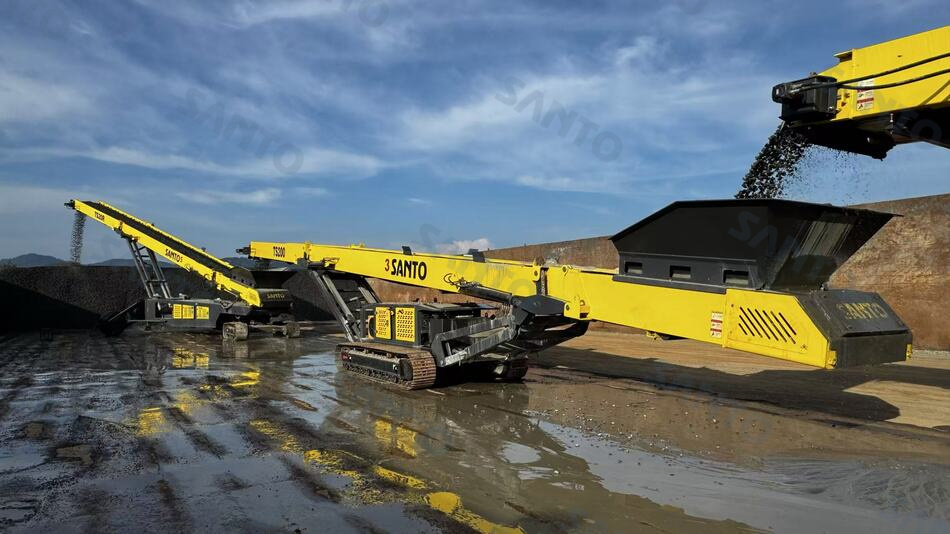
How pairing mobile conveyors with mobile crushers cuts cost and labor: continuous flow,…
Learn moreSend us your material, required capacity and site layout. SANTO engineers will size the equipment and return a configuration proposal within 12 hours — no obligation.