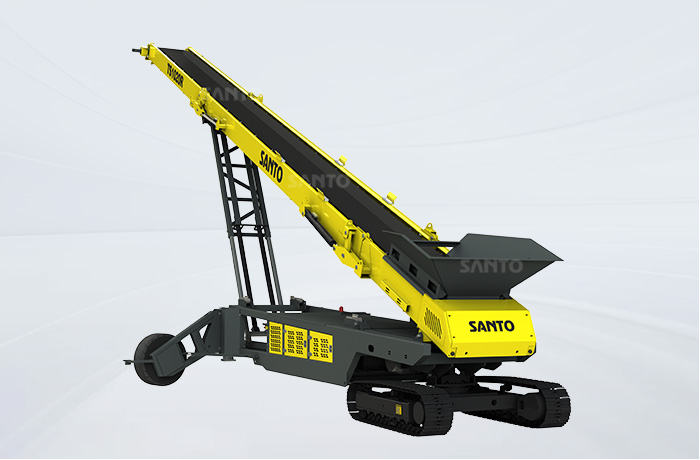
Tracked Radial Stacker
Tracked radial stacker with full 360° slew, 20-30 m belt and up to 1000 t/h. Builds large…
Learn more
What sets the tracked radial stacker price, and what to look for in a supplier.
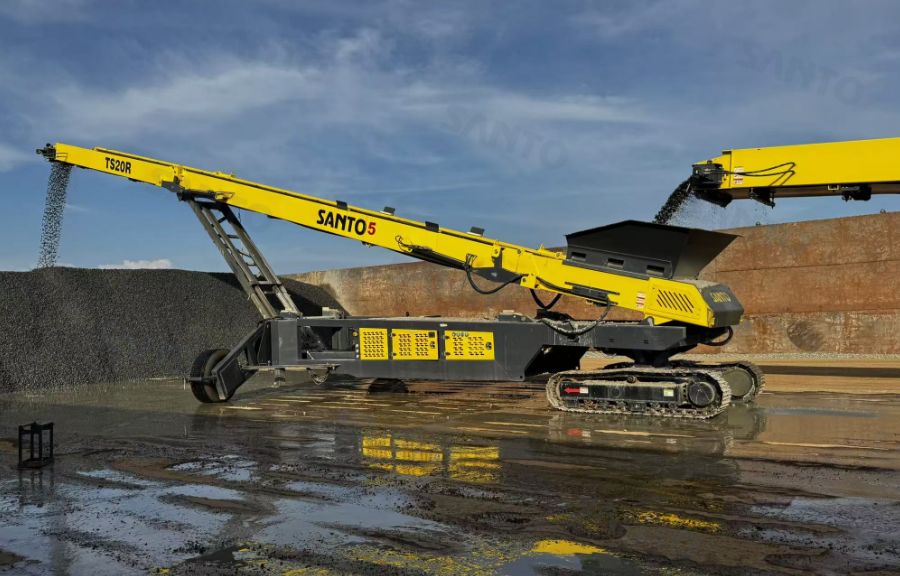
A tracked radial stacker is a track-mounted conveyor that slews to build large, even stockpiles on rough ground. Its price follows capacity, component grade, belt spec, automation, and the support wrapped into the quote. The tracked radial stacker product page shows the machine these factors build.
Capacity in tons per hour is the first lever: a 500 t/h unit costs less than a 200 t/h sibling only if duties differ, but generally higher capacity means a higher price through bigger drive and structure on the frame.
Component grade matters: branded motors and reducers run steadier and stronger yet cost more. Belt width, length, and wear or corrosion resistance also shift price as the spec rises for the duty.
A control system with remote monitoring, auto speed, and fault diagnosis lifts convenience and price but cuts operating cost. The automation pays back on busy stockyards where every stop is a lost ton moved.
After-sales such as install, training, maintenance, and spares is built into the price of a serious supplier and removes later worry. Cheap quotes that omit it shift risk to the buyer when the machine stalls.
| Layer | Price effect |
|---|---|
| Components | Branded costs more, lasts longer |
| Controls | Auto features add cost |
| Support | Built-in vs omitted |
SANTO builds crawler mobile stackers and bulk belt equipment for ports, docks, power plants, cement and building-material plants, and mines. Tracked units give strong passability on rugged, muddy, or soft ground at the face.
For the most accurate tracked radial stacker price and supplier details, contact the factory so the quote reflects capacity, ground, and automation rather than a generic number printed for a unit you may not need.
Ground pressure decides the chassis. A tracked unit spreads load so it crosses soft reclaim pads that would trap a wheeled machine, which is why mines pay for tracks despite the higher base price on the unit at purchase.
Slew bearing and boom structure are where quality shows. A stiff, well-welded boom holds its line under a full pile and a side wind, while a weak one drifts and spills material down the stack over the season.
Compare configured quotes, not catalog lines, and weigh the support as part of the number. A slightly higher price with local spares beats a low price that strands the pile when a belt tears on a remote site.
The application of mobile conveyors in stockpiling explains why that stiff structure pays back: neat piles reclaim cleanly and the stacker stays available through the season instead of waiting on a part that never came.
Capacity in t/h, then component grade and belt spec.
Yes, but remote and auto features cut operating cost on busy yards.
It removes later risk on install, training, and spares.
Yes, tracks give passability on rough, muddy, or soft ground.
Tracked radial stacker with full 360° slew, 20-30 m belt and up to 1000 t/h. Builds large…
Learn more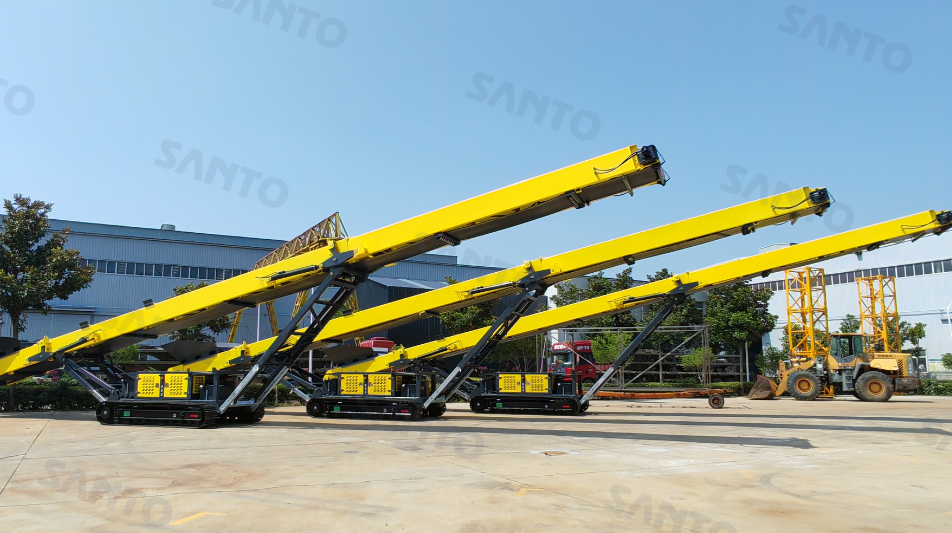
Understand mobile conveyor price drivers: specs, drive system, options, steel quality,…
Learn more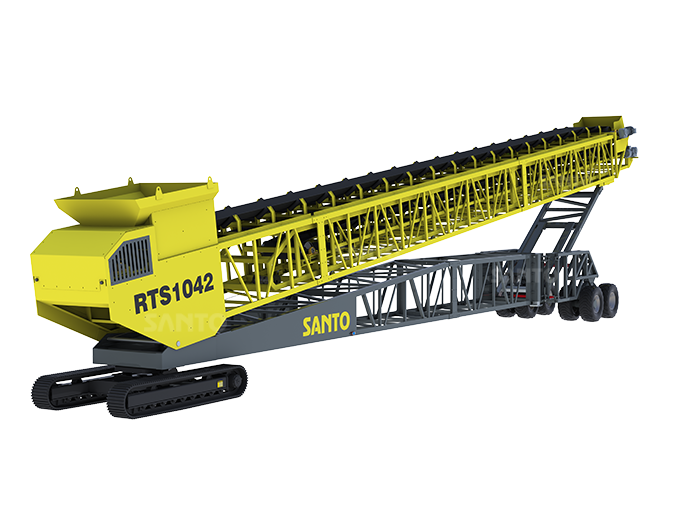
The main types of mobile conveyors: wheeled, tracked, telescopic, radial, stacker, swivel, and…
Learn more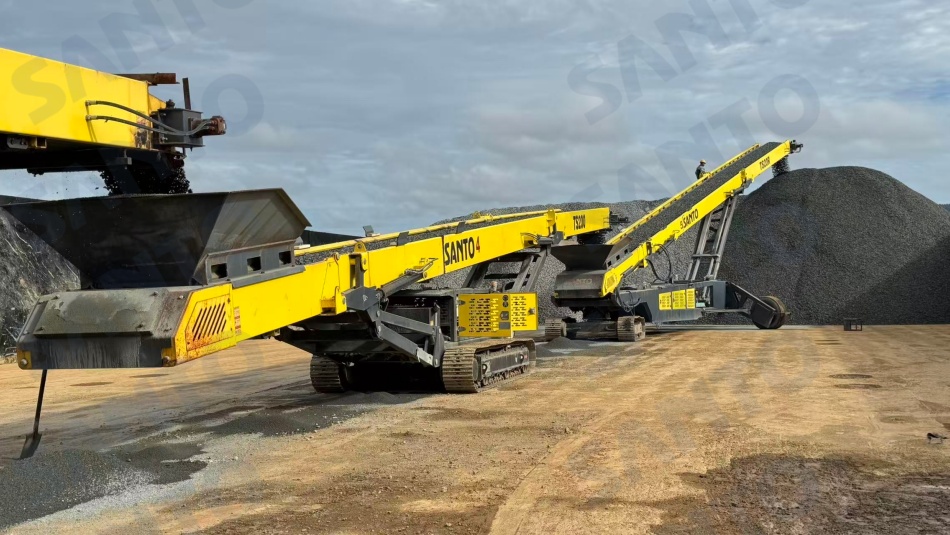
How mobile conveyors handle ore, coal, cement, port, and grain stockpiles: structure,…
Learn moreSend us your material, required capacity and site layout. SANTO engineers will size the equipment and return a configuration proposal within 12 hours — no obligation.