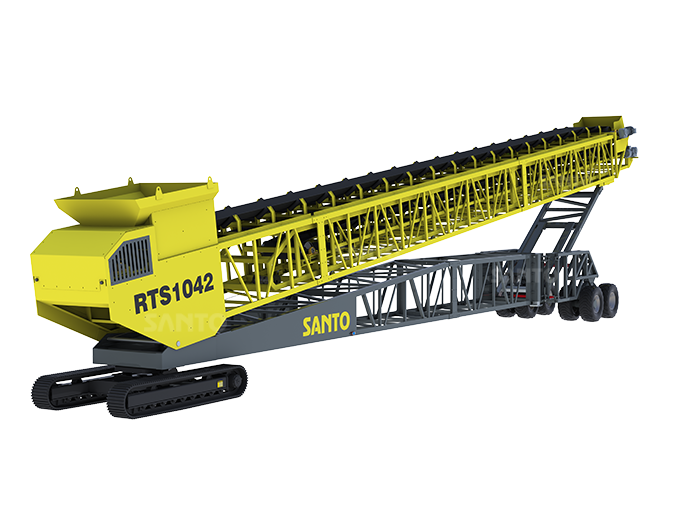
Types of Mobile Conveyors
The main types of mobile conveyors: wheeled, tracked, telescopic, radial, stacker, swivel, and…
Learn more
How to decide between a mobile and a fixed belt conveyor for your industry.
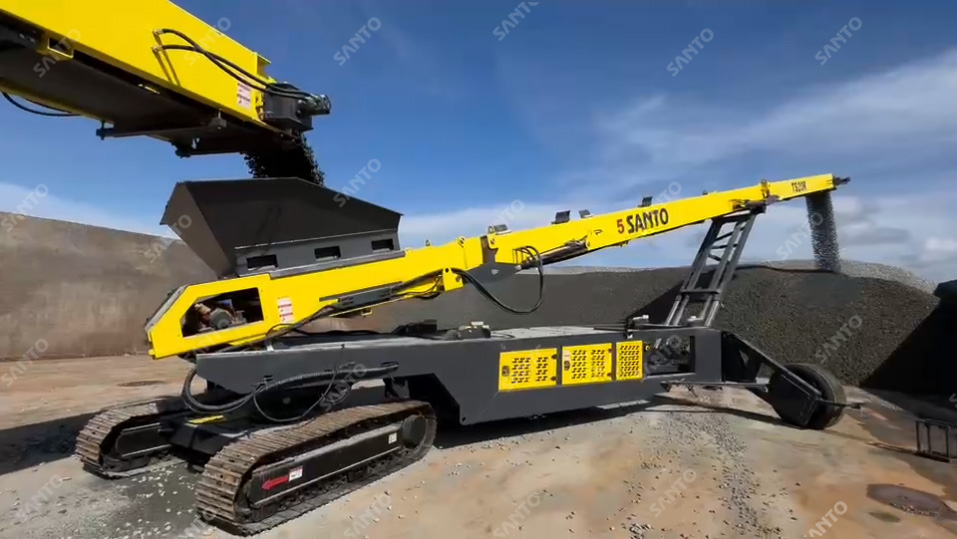
Mobile belt conveyors mount on wheels, rails, or towing and move at will; fixed conveyors bolt to foundations for stable long runs. Choose mobile for frequent transfer and temporary duty, fixed for steady long-term production. The types of mobile conveyors guide shows the mobile chassis choices behind this decision.
Mobile conveyors install by axle, rail, or semi-trailer tow, are easy to fit, and disassemble or move anytime, suiting frequent relocation. Fixed conveyors need foundation work and longer install before they can run at the site.
Mobile units are more flexible, so the line changes and adjusts more easily and productivity stays higher when the plan shifts with the season or the shipment that just arrived at the gate of the plant.
Mobile suits sites that transfer equipment often, such as short-term storage and temporary operations where on-site flexibility wins. Fixed suits long-term stable production where efficiency is steady once installed and left alone.
The choice is not absolute: many sites run fixed trunk lines with mobile units at the flexible ends. Engineers compare against the real situation to tailor the conveying solution that fits the duty and the ground.
| Need | Better choice |
|---|---|
| Frequent move | Mobile |
| Temporary duty | Mobile |
| Stable long run | Fixed |
| Mixed | Fixed plus mobile ends |
Mobile avoids civil cost and speeds deployment, paying back on short or shifting projects where a foundation would be poured and later broken out. Fixed costs more to build but is efficient and stable over a long life of service.
SANTO engineers weigh both against the actual need and duty cycle, then propose the mix that gives the best cost per ton moved, because the right answer is rarely one format for an entire plant from feed to ship.
Think in lifecycles, not install dates. A fixed line wins on cost per ton over decades at one place; a mobile line wins the moment the place, the face, or the product is due to change within a few years of operation.
A fixed trunk with mobile ends gives stable cheap carry plus flexible load and reclaim, capturing most of both benefits without betting the whole plant on one rigid layout that cannot move when the plan does at the site.
Start from how often the equipment moves and how long the production runs. If the answer is often and short, mobile wins; if rarely and long, fixed wins; if both, the hybrid wins and the engineers will say so in the proposal.
The application of mobile conveyors in stockpiling role is where the mobile end pays off most, because the pile point moves while the process line usually stays put on the site through the life of the operation.
Frequent relocation and temporary or short-term duty.
Long-term stable production with a steady line.
Yes, fixed trunk with mobile flexible ends is common.
SANTO engineers compare against the real site and need.
The main types of mobile conveyors: wheeled, tracked, telescopic, radial, stacker, swivel, and…
Learn more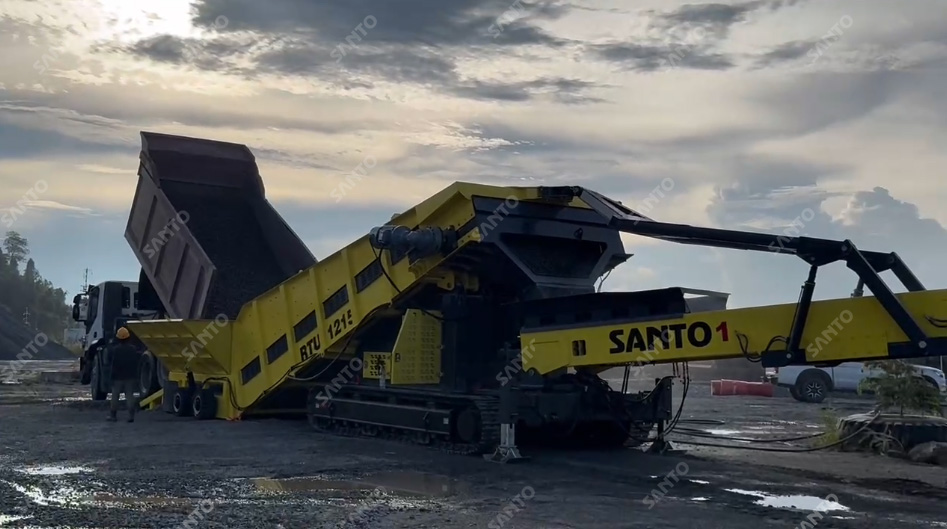
Why mines choose mobile conveyors: flexible displacement, seamless link to excavation, less…
Learn more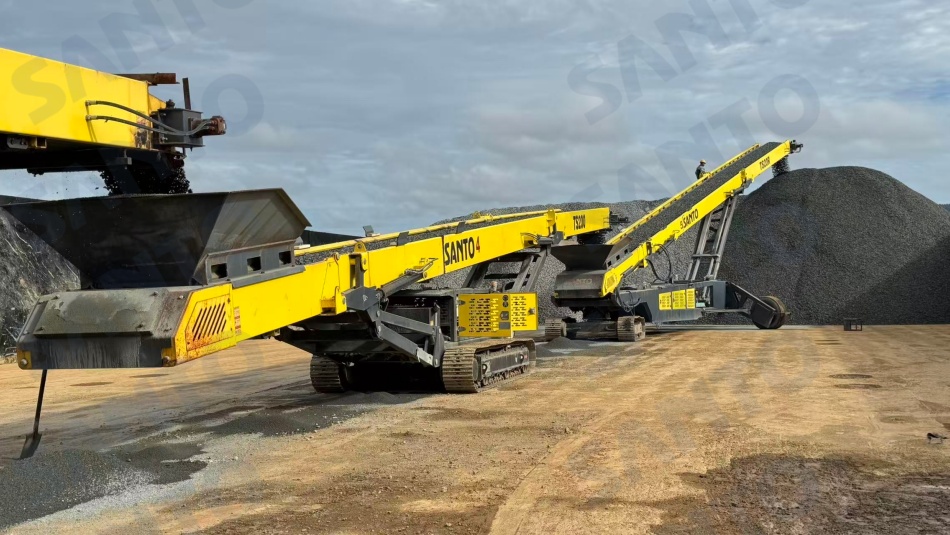
How mobile conveyors handle ore, coal, cement, port, and grain stockpiles: structure,…
Learn more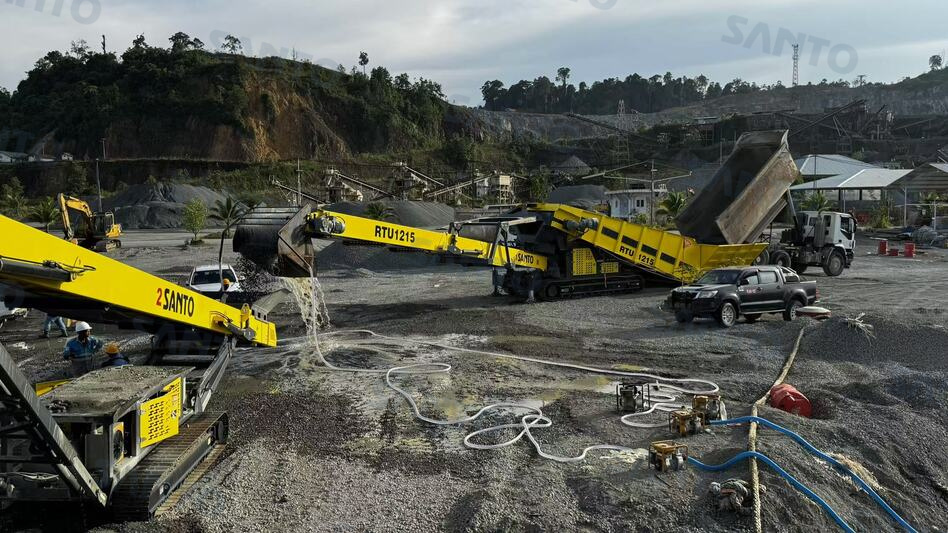
A buying guide to mobile conveyors for sale: types, features, mobility, and how SANTO matches…
Learn moreSend us your material, required capacity and site layout. SANTO engineers will size the equipment and return a configuration proposal within 12 hours — no obligation.